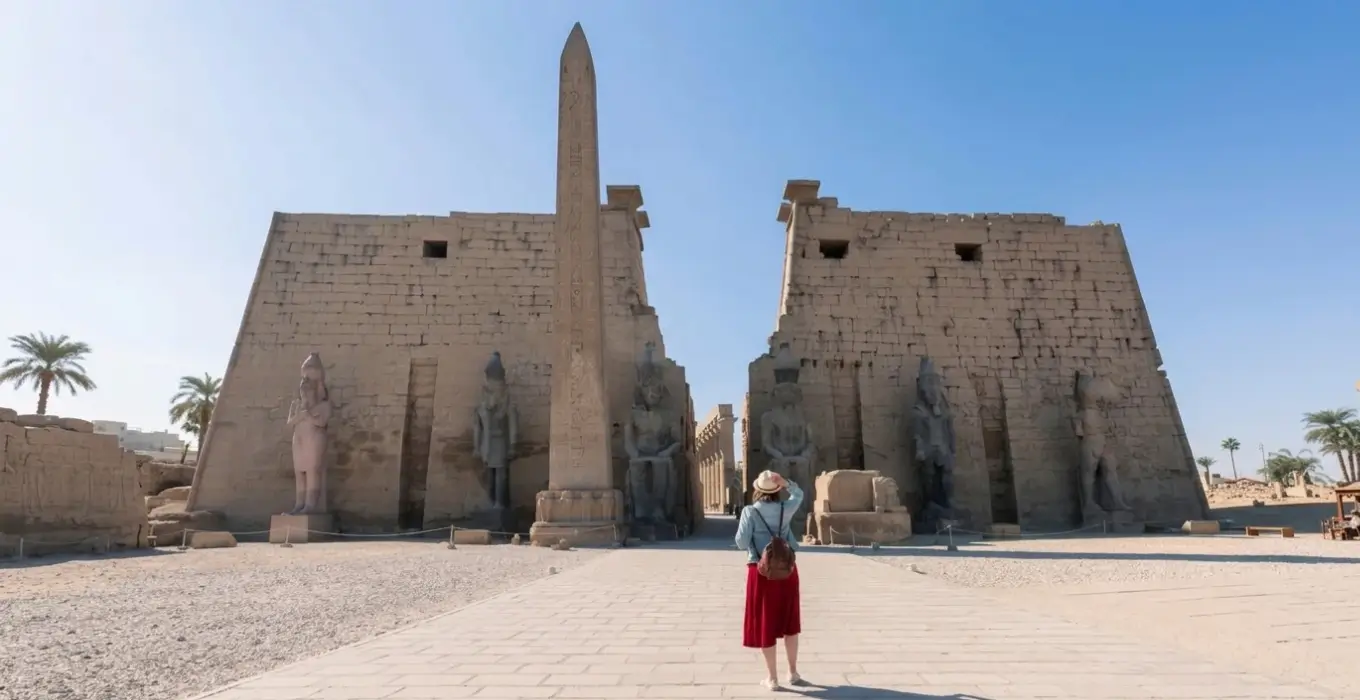

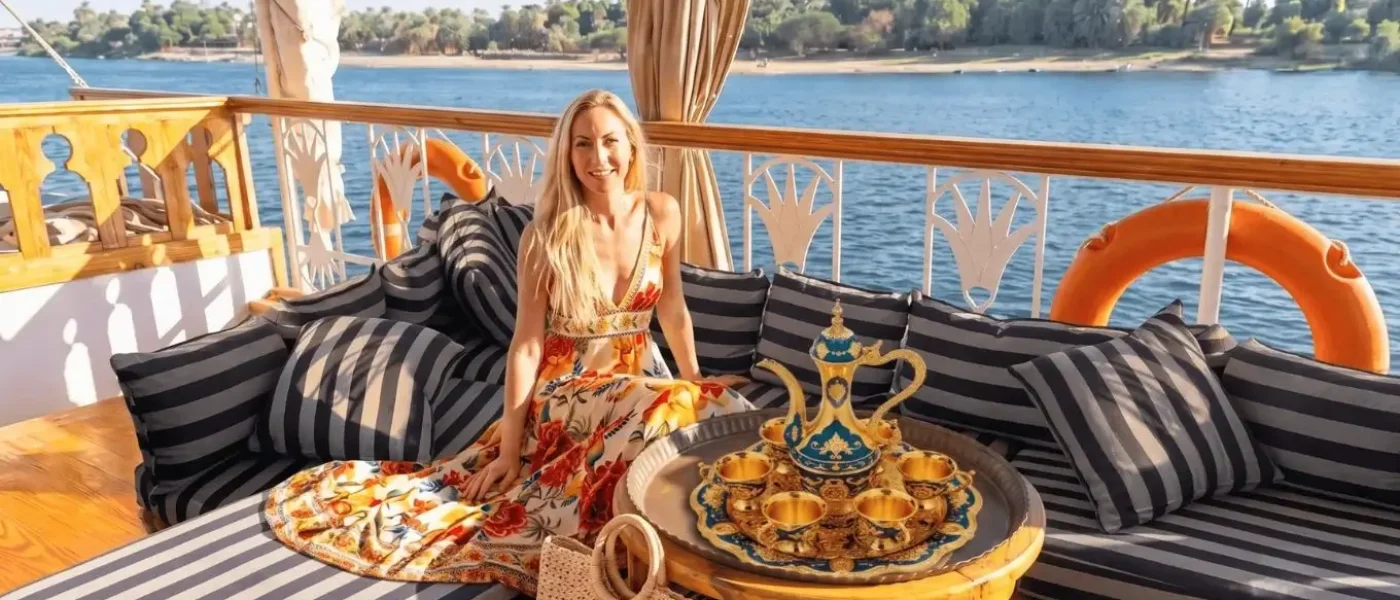
I’m Momo, and I’ve spent enough seasons on this river to lose count of how many times a guest has asked me the same thing at the dock: dahabiya or Nile cruise ship, which one?
Here’s the short version I always give first: a dahabiya is a small, wind-powered sailboat carrying 8 to 20 guests, built for a slow, private-feeling trip. A Nile cruise ship is a larger, engine-powered vessel with 60 to 150-plus cabins, built for comfort, amenities, and a fixed schedule between Luxor and Aswan. Both sail the same stretch of river and stop at many of the same temples, but I promise you, the experience on board is almost nothing alike.
So let me walk you through price, pace, comfort, and access the way I would over dinner, so you can book the right one the first time, whether that ends up being one of our dahabiya sailings with a private Egyptologist guide, or one of our Nile cruise packages built for larger groups and families.
What Exactly Is a Dahabiya?
A dahabiya is a traditional twin-masted sailboat. I like telling guests the name comes from the Arabic word for “golden,” a nod to the private yachts Egyptian royalty and wealthy 19th-century travellers once sailed in. The modern versions I work on keep that wooden hull and sail rig but add private en-suite cabins, air conditioning, and a shaded sun deck, while a small tugboat pulls us along on days the wind won’t cooperate.
Because a dahabiya only has a handful of cabins, usually between four and ten, I can tell you from experience that the crew-to-guest ratio is high and meals are served family-style at a single table, the way I’d host you myself. Many of the dahabiyas I work with carry one licensed Egyptologist guide dedicated to that single boat, so when you ask me something, you get a real answer, not a rushed one through a shared microphone on a crowded deck.
The shallow draft and smaller size also let us moor at quieter riverbanks and Nubian villages that the larger cruise ships simply can’t reach, which is exactly why a dahabiya sailing feels more like a private charter to me than a scheduled tour.
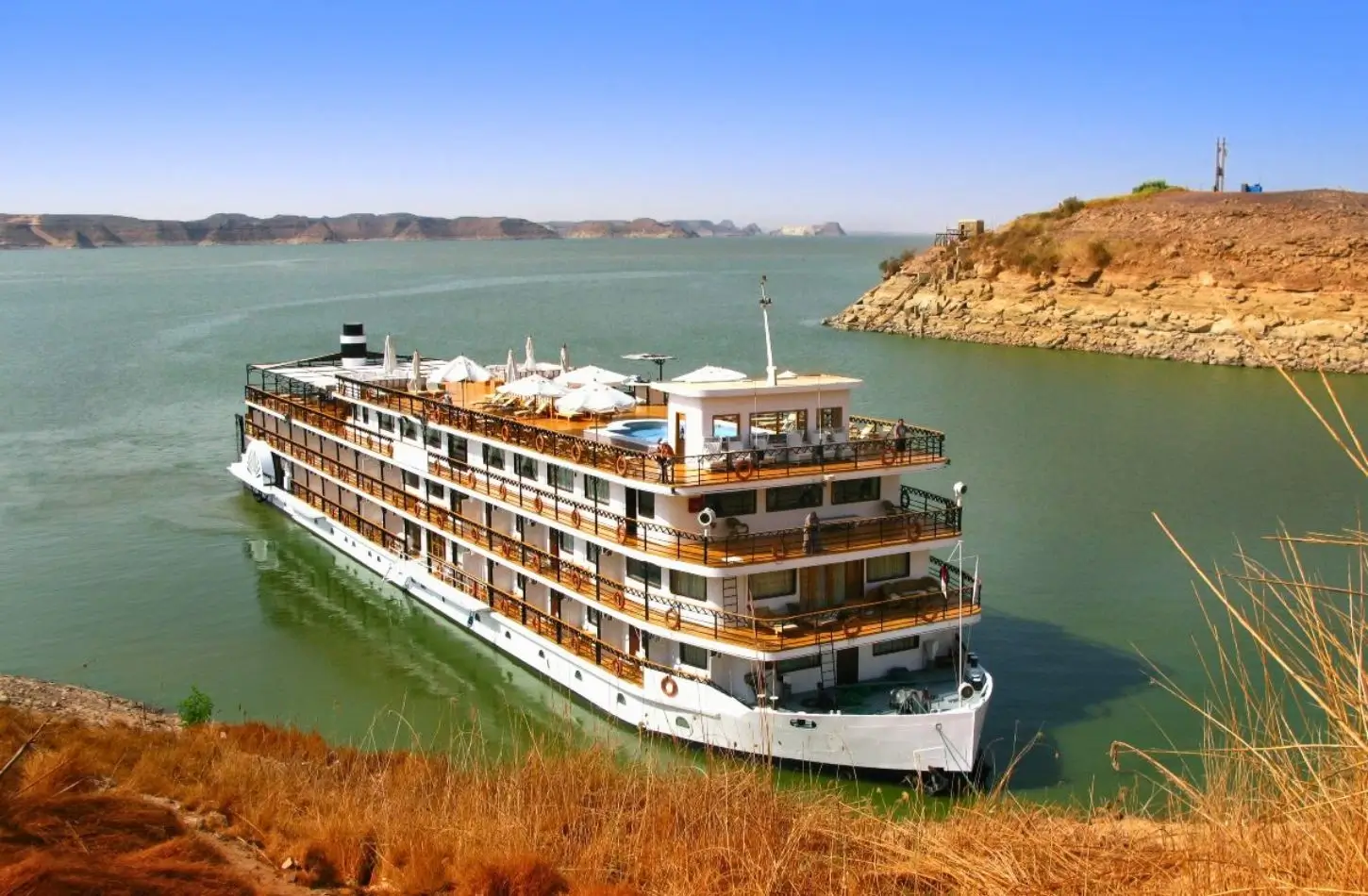
What Is a Standard Nile Cruise Ship?
A standard Nile cruise ship is a multi-deck, engine-powered riverboat built for tourism between Luxor and Aswan. I’ve worked these decks too, and I can tell you they typically carry 60 to 150-plus guests across three or four decks, with a pool, sun deck, lounge bar, restaurant, and often a small gym or spa. Entertainment nights, like a galabeya party or a folkloric show, are part of the fun.
Most of the cruise ships I’ve guided on run fixed 3-night, 4-night, or 7-night itineraries in either direction between Luxor and Aswan, with excursions to Karnak Temple, the Valley of the Kings, Edfu Temple, Kom Ombo, and Philae Temple built right into the schedule. We usually sail overnight, so you’ll often wake up in a new city without having watched the river go by between stops.
The trade-off for that convenience is scale. I run excursions in larger groups on these ships, and while I’m a licensed Egyptologist either way, on a cruise ship I’m sharing my attention across dozens of cabins instead of just yours.
Dahabiya vs Nile Cruise: Key Differences at a Glance
Here’s the table I sketch out for guests who ask me to just lay it all side by side.
| Dimension | Dahabiya | Nile Cruise Ship |
|---|---|---|
| Passenger capacity | 8–20 guests | 60–150+ guests |
| Power source | Sail, with tugboat assist when needed | Diesel engine |
| Sailing schedule | By day, weather-dependent | Mostly overnight, fixed timetable |
| Cabins | 4–10 cabins, no elevator | 30–75+ cabins, some with elevators |
| Onboard amenities | Sun deck, lounge, sometimes a small pool | Pool, jacuzzi, gym, spa, bar, entertainment |
| Guide-to-guest ratio | Often one Egyptologist guide per boat | One guide shared across 20–40+ guests |
| Access | Reaches quieter moorings and villages | Limited to major docking points |
| Price per night | Higher, per-cabin exclusivity | Lower, cost spread across more guests |
| Best for | Couples, small groups, slow travel | Families, first-timers, larger groups |
If you take one thing from me, take this: the biggest difference isn’t the boat, it’s the pace. On a dahabiya I sail by day, so you watch the riverbank change in real time. On a cruise ship, we sail at night so you cover more ground while you sleep. I don’t think either is objectively better, they just suit different kinds of travellers.
What Does Each Actually Cost?
Since a dahabiya has so few cabins, I have to spread the cost across a much smaller group, which is why I generally charge more per person, per night, than an equivalent cruise ship cabin, even though my onboard facilities are simpler. A standard cruise ship spreads its higher running costs, bigger crew, engines, more amenities, across many more guests, so it’s usually the better-value pick if you’re travelling with family or on a set budget.
I’ll be honest with you: exact per-person rates shift with season, cabin category, and how far ahead you book, so treat any figure you see from me as a starting-from number to confirm when you’re ready to reserve, not a fixed price. My rule of thumb: October through April is peak season and commands the highest rates on both boat types, while May, June, and September get you meaningfully lower fares for only a modest trade-off in daytime heat.
If budget is what’s deciding this for you, I’d point you to a 3-night or 4-night standard cruise as the more economical way to see the Luxor–Aswan stretch. If your budget has room and privacy matters more, I think a 4-night dahabiya sailing from Aswan to Luxor is worth the premium.
Which Is Right for You? Matching the Boat to Your Trip
Couples and honeymooners: I’ll steer you toward a dahabiya. The small guest count, the quiet sun deck, the private-feeling meals – I’ve seen it make the river itself part of the romance, not just a backdrop.
Families with children: I’ll be straight with you here: a standard cruise ship’s pool, larger public spaces, and more flexible dining make life easier for parents, especially with younger kids who won’t sit still through a slow-paced sail.
First-time visitors on a tight schedule: I’d put you on a standard cruise ship. The fixed 3 or 4-night itinerary hits the major temples efficiently, and it pairs well with a Cairo add-on before or after.
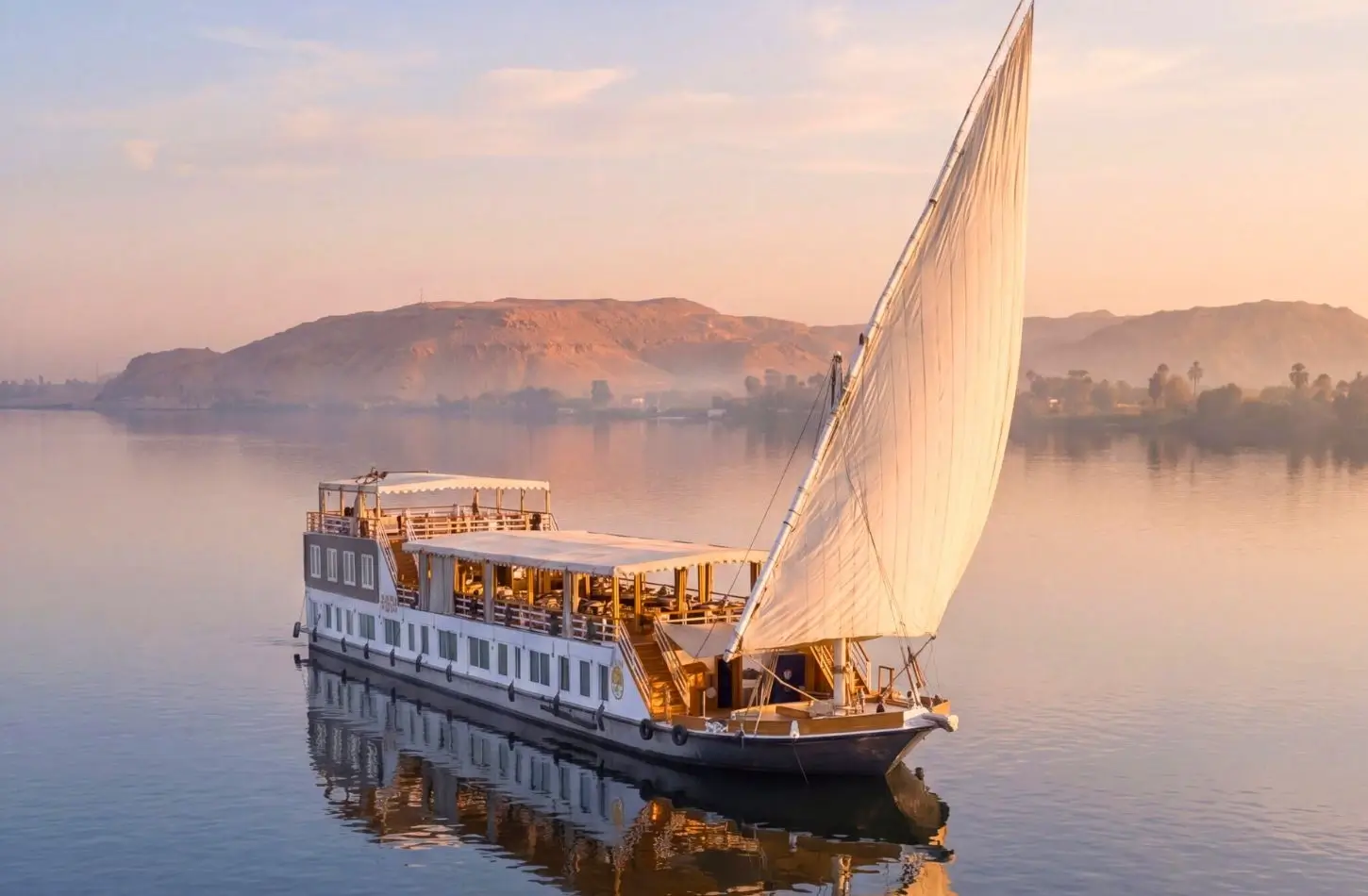
Travellers who want a private Egyptologist guide and flexible stops: this is where I recommend a dahabiya. My dedicated attention and our shallow draft mean I can adjust the day to weather, crowds, or your own pace, including village stops a large ship can’t make.
History enthusiasts and photographers: I’ll tell you honestly, the slower daytime sailing on a dahabiya gives you real time to watch temples, feluccas, and riverside life pass by, instead of mostly seeing the river through a cabin window overnight.
Multi-generational or larger groups: I’d choose a standard cruise ship for you. More cabins and more predictable facilities, elevators on some ships, more staff on hand, make logistics simpler when you’re travelling as a bigger party.
Sample Itineraries: Dahabiya and Nile Cruise Routes
When I’m sailing a dahabiya, it’s most often a 4-day cruise from Aswan to Luxor, and I take guests to Philae Temple, the Aswan High Dam, Kom Ombo, Edfu Temple, finishing with the West Bank temples in Luxor, all at a slower daily pace with fewer stops crammed into each day.
On a standard cruise ship, I run the same route in either direction, most commonly as a 3-night Nile cruise from Aswan to Luxor or a 4-night Nile cruise package from Luxor to Aswan, hitting the same core temple list but on a tighter, pre-set schedule with larger excursion groups.
If you’re combining this with the rest of Egypt, I’d have you browse full Nile cruise itineraries to see how either boat type slots into a longer Cairo–Luxor–Aswan trip, or check our 5-star Nile cruises and luxury Nile cruise ships if you want cruise-ship comfort with a higher service tier.
Practical Tips Before You Book
- Book 2 to 3 months ahead if you’re travelling in peak season (October–April). I only have a handful of cabins on a dahabiya, and they sell out first.
- Tell me about any mobility needs before booking a dahabiya with me. Most have no elevator and narrow stairs between decks, unlike some larger cruise ships.
- Don’t expect strong Wi-Fi on a dahabiya. Most cruise ships I work on offer at least basic Wi-Fi and air conditioning throughout, if that matters to you.
- Pack a light layer for evenings on the sun deck with me. It cools down fast once the sun drops, even outside summer.
- Ask me directly whether your Egyptologist guide is dedicated to your boat (that’s typical on a dahabiya) or shared with other cabins (typical on a larger ship), especially if in-depth Q&A matters to you.
- The Esna lock can add unpredictable waiting time for cruise ships between Luxor and Aswan, so I always tell guests to build a little slack into same-day flight connections.
- Bring small-denomination cash for tipping the crew on either boat type. Tip envelopes are the local norm, and I usually help guests handle this on the last evening.
- If you get seasick on open water, don’t worry. I promise you the Nile is a river, not the sea, and neither boat type rocks much under normal conditions.

FAQS For Dahabiya vs Nile Cruise
Is a dahabiya more expensive than a Nile cruise ship?
Yes, and I’ll tell you why: a dahabiya usually costs more per person per night than a standard Nile cruise ship, because I’m splitting the cost across only 8 to 20 guests instead of 60 or more. You’re paying me for exclusivity and a dedicated guide, not extra facilities.
How many people does a dahabiya carry compared with a Nile cruise ship?
On a dahabiya, I typically have 8 to 20 guests across 4 to 10 cabins. On a standard Nile cruise ship, I could be looking after anywhere from 60 to 150-plus guests across 30 or more cabins. That scale difference is really what drives everything else.
Which is more comfortable, a dahabiya or a Nile cruise ship?
Depends what you mean by comfortable. A cruise ship gives you more onboard facilities, think pools, a gym, a spa, elevators on some ships. A dahabiya gives you a quieter kind of comfort with me, private-feeling space and no engine noise, but fewer amenities overall.
Do dahabiyas and Nile cruises visit the same temples?
Largely, yes. I take guests on both boat types to Kom Ombo, Edfu Temple, Philae Temple, and the Luxor West Bank sites. On a dahabiya, my shallow draft also lets me reach a few quieter moorings and village stops that larger cruise ships have to skip.
Is a dahabiya cruise good for families with children?
It can work if your family wants a calm, slow-paced trip, but I’ll be honest, the lack of a pool, limited public space, and no elevator usually make a standard cruise ship the easier choice I recommend for most families, especially with younger children.
How many nights should I book on a dahabiya vs a Nile cruise?
When I’m on a dahabiya, it’s almost always 4 nights between Aswan and Luxor, that’s the pace sailing needs. On a standard cruise ship, I can offer you more flexibility, commonly 3, 4, or 7 nights, depending on how much of the river you want to see.
Conclusion
At the end of the day, both a dahabiya and a standard Nile cruise ship sail the same stretch of river and reach many of the same temples, so I’d tell you the right choice comes down to pace, group size, and budget, not which one is “better.” I steer couples and slow travellers toward a dahabiya’s privacy and my full attention as your guide; I steer families, first-timers, and larger groups toward a cruise ship’s amenities and fixed schedule. Come browse our dahabiya sailings or our full range of Nile cruise packages, and I’ll help you compare current departure dates and lock in the pace that fits your trip.