
What’s the best one-day Cairo itinerary?
Start at the Giza Pyramids at sunrise, visit the Egyptian Museum by late morning, then end at Khan El Khalili Bazaar in the afternoon — beating both heat and crowds.
Pyramids first arrive by 8AM for cool temps & no tour buses
Museum midday 2–3 hrs indoors, AC escape from midday sun
Bazaar last — liveliest late afternoon-evening, best for bargaining
Budget $90–140 private guide, transport, lunch & entry fees included
One day in Cairo is enough to see the city’s three defining landmarks — the Giza Pyramids and Sphinx, the Egyptian Museum, and Khan El Khalili bazaar — if you visit them in the right order. This Egypt itinerary 1 day tour works because it follows the heat and the crowds, not against them.
Start at the pyramids at sunrise, move indoors to the museum once the sun climbs, and finish at the bazaar as the evening cools down. Whether you’re on a long layover, a cruise stopover, or simply short on time, one day in Cairo fits into roughly 9–10 hours, door to door from most Giza or Downtown hotels. Below is the exact schedule, realistic costs, and the adjustments that matter depending on why you only have a single day.
👉 Book your unforgettable Cairo experience now with Cairo Tours and make every hour in the city count.
Who This One-Day Cairo Itinerary Is For
Not every “one day in Cairo” situation is the same, and the itinerary should flex depending on which one applies to you.
Layover travelers with 8–10 hours between flights make up a large share of people searching for an Egypt day tour, and Cairo International Airport is well-positioned for this: the pyramids are about 45–60 minutes away, depending on traffic.
Cruise passengers stopping in Alexandria or Port Said and adding a Cairo excursion face a longer drive each way (2–2.5 hours from Alexandria), which compresses the window for sightseeing and usually means cutting one stop. Travelers tacking a single Cairo day onto a beach holiday in Hurghada or Sharm El Sheik typically fly in for the day, which works well with this exact schedule. And first-time visitors who only have one full day before flying onward to Luxor or Aswan get the most flexibility, since they’re working from a Cairo hotel rather than racing an airport clock.
Whichever category you fall into, the core sequence — pyramids, museum, bazaar — stays the same. What changes is how much buffer time you build in and which stop gets dropped if something runs long.
One Day in Cairo: The Hour-by-Hour Itinerary
This schedule is built around real Cairo traffic patterns and site opening hours, not an idealized version of them. It assumes a private vehicle or guided Egypt day tour, which is what makes hitting all three landmarks in one day realistic.
| Time | Stop | Duration |
|---|---|---|
| 6:30 – 7:00 AM | Hotel pickup (Giza or Downtown) | – |
| 7:00 – 10:00 AM | Giza Pyramids & Great Sphinx | 3 hrs |
| 10:00 – 10:30 AM | Drive to Downtown Cairo | 30 min |
| 10:30 AM – 12:30 PM | Egyptian Museum, Tahrir | 2 hrs |
| 12:30 – 1:30 PM | Lunch at a local restaurant | 1 hr |
| 1:30 – 2:00 PM | Drive to Islamic Cairo | 30 min |
| 2:00 – 3:30 PM | Khan El Khalili & Old Cairo | 1.5 hrs |
| 3:30 – 4:00 PM | Return to the hotel or the airport | 30 min |
Running this 1-day Cairo itinerary on public transport or rideshare alone is possible, but with a tighter budget, add an extra 30–45 minutes for traffic between Giza and Downtown, especially after 9:00 AM. If you’re self-driving the logistics, treat every transfer time above as a minimum, not an average.
Why This Order Works: Heat, Crowds, and Cairo Traffic
The pyramids-first, bazaar-last structure isn’t arbitrary. Giza is an open, shadeless plateau, which makes it brutal by midday from May through September and uncomfortable even in the cooler months once the sun is fully up. Arriving at opening time also means arriving ahead of the tour-bus wave that lands between 9:30 and 11:00 AM, when the plateau’s parking areas and ticket lines fill up fast.
The Egyptian Museum, by contrast, is indoors and air-conditioned, making it the natural midday stop once the heat outside becomes a liability. Saving it for late morning also avoids the museum’s own opening rush, since most large group tours arrive right at 9:00 AM.
Khan El Khalili works best last for a different reason: it’s genuinely more atmospheric in the late afternoon and early evening, when lanterns come on, tea houses fill up, and the heat of the day has broken. It’s also the one stop on this itinerary with no strict opening hours to plan around, which makes it the flexible anchor at the end of a schedule that’s otherwise running on a clock.
Morning: Giza Pyramids and the Great Sphinx
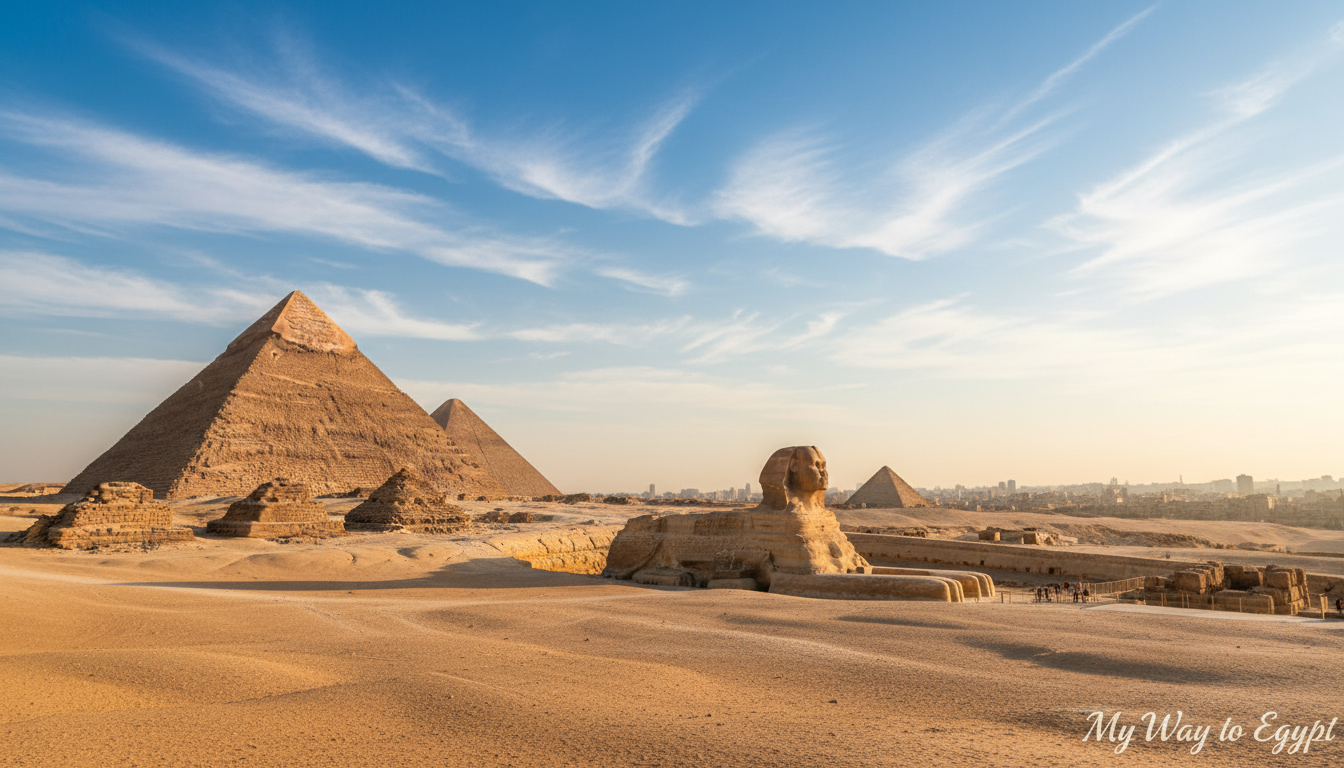
Arrive at the Giza Plateau by 8:00 AM, ideally earlier. The gates open at 8:00 AM, and the first hour offers the softest light, the smallest crowds, and noticeably cooler temperatures — a real difference between April and October.
Entry to the plateau covers the three pyramids of Khufu, Khafre, and Menkaure from the outside, the Sphinx, and the Valley Temple. Going inside the Great Pyramid requires a separate ticket with limited daily slots, so decide in advance if that matters to you — it adds roughly 30 minutes and isn’t necessary to appreciate the site.
The interior is narrow, hot, and largely bare; most first-time visitors are satisfied by the exterior and the Valley Temple alone. Politely decline camel and horse touts near the entrance; agree on a price in writing before any ride or photo if you do want one, since price disputes here are the most common complaint among day-trippers.
For the best classic photo of the Sphinx with all three pyramids behind it, head to the viewpoint southwest of the plateau rather than shooting directly in front of the Sphinx itself.
If pyramids are the main draw and you have a little more flexibility than a single day, our private Pyramids, Memphis & Saqqara tour extends the morning into the older Step Pyramid and the open-air ruins of ancient Memphis, both about 30–45 minutes south of Giza.
Midday: The Grand Egyptian Museum and Lunch
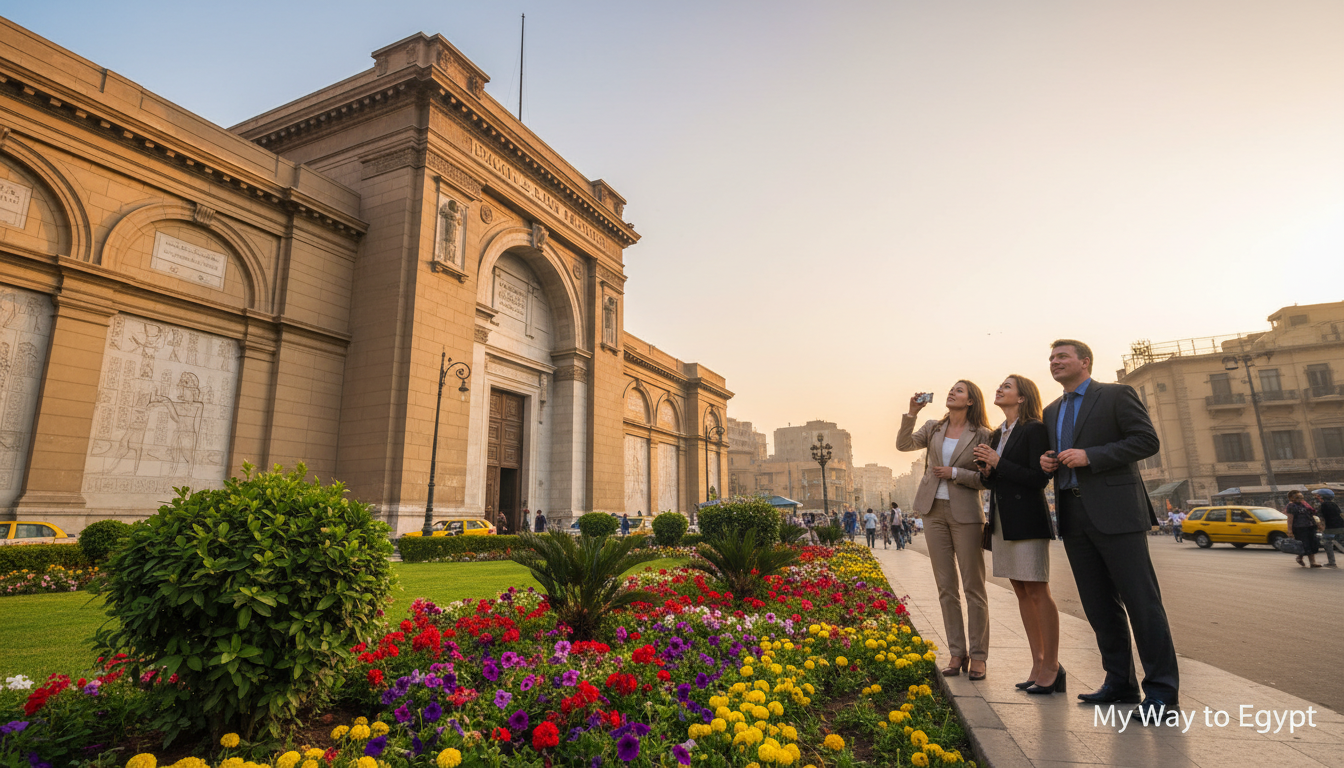
Two to three hours is enough at the Grand Egyptian Museum (GEM) to see the highlights: the complete Tutankhamun collection of more than 5,000 artifacts displayed together for the first time, the colossal granite statue of Ramses II anchoring the main atrium, and the Grand Staircase lined with statuary spanning Egypt’s ancient dynasties. GEM fully opened beside the Giza Plateau in November 2025, which means it now slots directly into a one-day Cairo itinerary without the long drive into Downtown that the older Egyptian Museum in Tahrir Square used to require.
A licensed guide makes a real difference here. GEM is the largest archaeological museum in the world, spanning more than 24,000 square meters of exhibition space across twelve main galleries — easy to wander for hours without finding the pieces that matter most. With a guide, the same two to three hours covers the full Tutankhamun collection, the Grand Hall, and Khufu’s solar boat, rather than getting lost in a building designed to be seen over a full day. Tickets are sold for specific time slots and must be booked online in advance, so reserve your entry window before you fix the rest of your one-day schedule around it.
Plan lunch for 12:30–1:30 PM at GEM’s on-site restaurant, which looks directly out at the pyramids, or head back toward central Giza for something more affordable. A bowl of koshari at a local spot costs a fraction of museum dining and is, by most accounts, better. If you’d rather sit down properly without deciding, most private day tours build a fixed restaurant stop into the itinerary.
Afternoon: Khan El Khalili Bazaar and Old Cairo
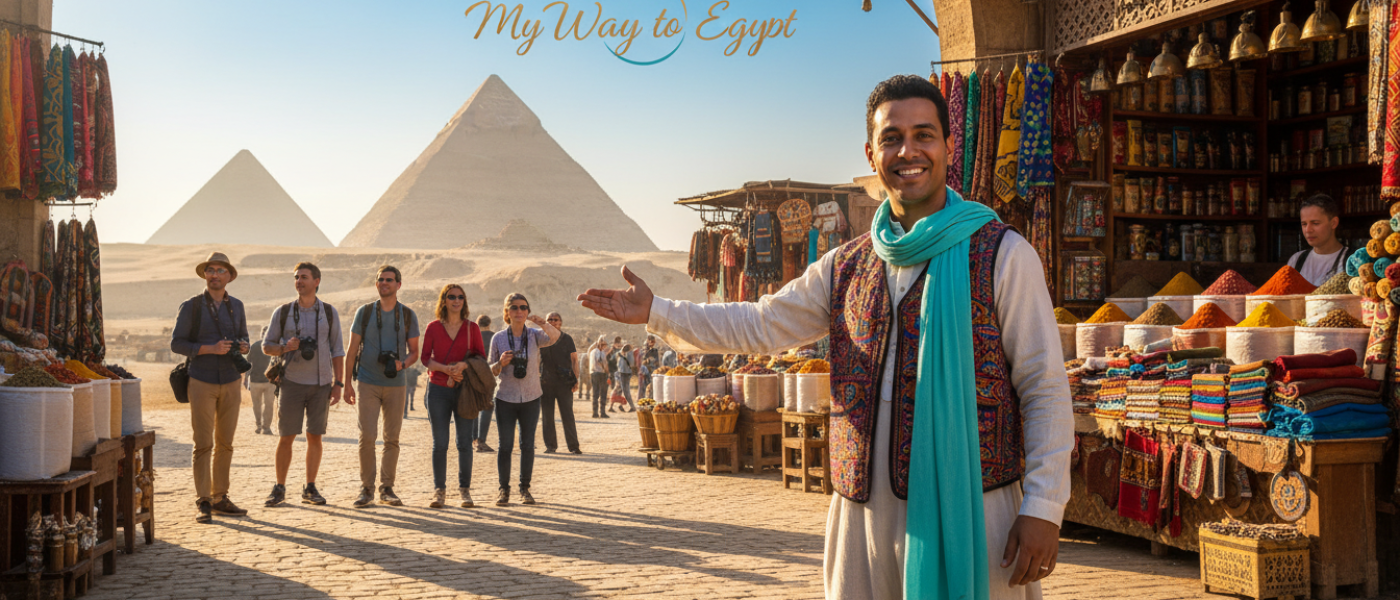
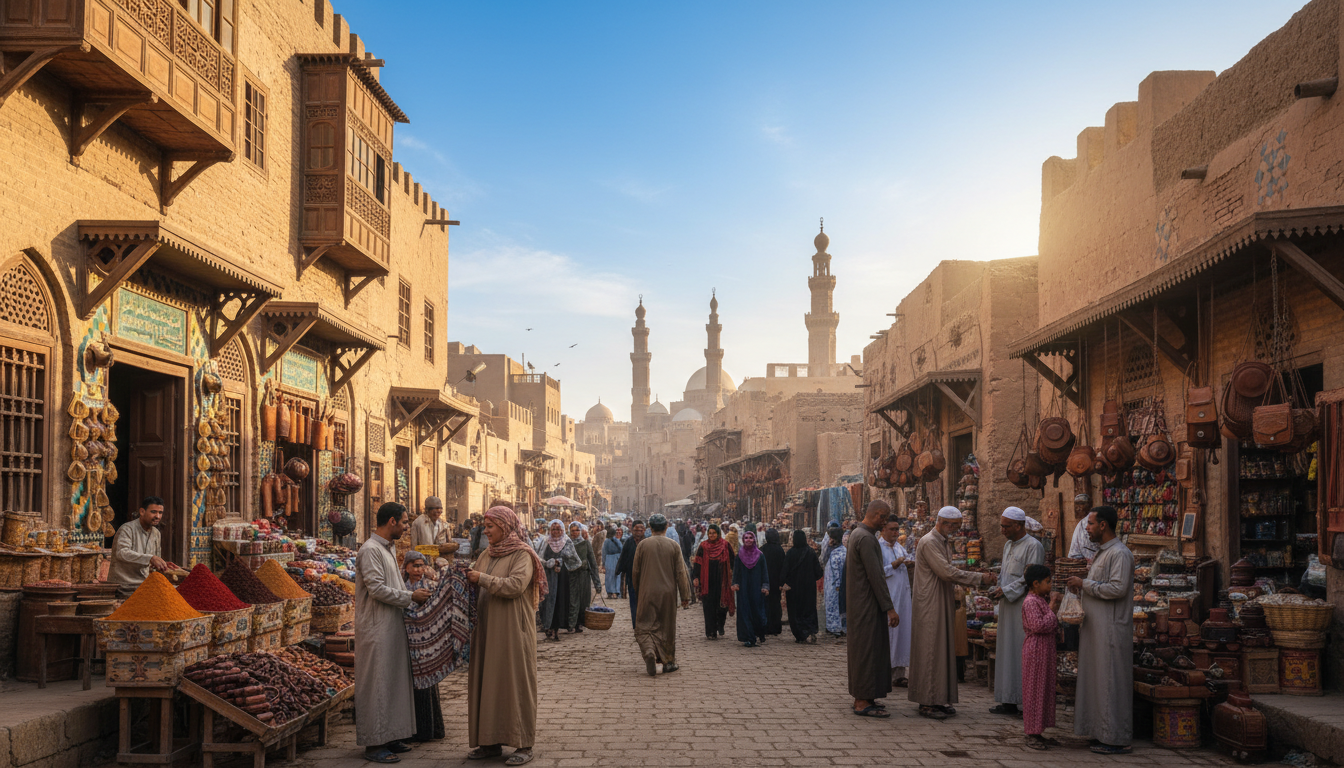
Khan El Khalili is the natural final stop on an Egypt day tour — it rewards wandering rather than a strict schedule, and the narrow lanes are at their liveliest from mid-afternoon onward. Expect to bargain; vendors expect it too, and an opening offer of half the asking price is a reasonable starting point for souvenirs and textiles.
If you have an extra hour, the nearby Al-Hussein Mosque and Al-Azhar Mosque are open to visitors (cover shoulders and knees, remove shoes at the door). El Fishawy, a 200-year-old cafe inside the bazaar, is the standard stop for mint tea and people-watching once your feet need a break.
Travelers who prefer a quieter alternative to the bazaar’s crowds can swap this stop for Coptic Cairo’s Hanging Church and narrow historic lanes — calmer, historically distinct, and just as photogenic, though it sits roughly 30 minutes further from Giza than Khan El Khalili does.
Itinerary Variations by Traveler Type
The base schedule above assumes a full, unhurried day. In practice, most people searching for an Egypt itinerary 1 day tour are working around a specific constraint — a flight, a ship, or young kids — and the itinerary should adapt accordingly.
| Traveller Type | Adjustment |
|---|---|
| Long layover (8–10 hrs at the airport) | Drop the bazaar; keep pyramids + museum only, with a 45-minute buffer built into each transfer. |
| Cruise stopover (Alexandria or Port Said) | Start earlier (6:00 AM) to account for the longer drive from the port; the museum and bazaar may need to be swapped for time. |
| Traveling with kids | Swap Khan El Khalili’s crowds for the calmer Cairo Citadel and its panoramic city views. |
| Heat-sensitive travelers (June–Aug) | Start at 6:00 AM, finish the pyramids by 9:00 AM, and treat the museum as a midday heat escape. |
Private Guide or DIY: Getting Around on a One Day Cairo Itinerary
Cairo traffic is the single biggest risk to a tight one-day schedule. Uber is reliable and reasonably priced for point-to-point trips, but it doesn’t solve waiting time, parking, or site navigation at the pyramids — you’ll still need to find your driver again afterward in a crowded lot, and ride-hailing apps can struggle with pickup pins on the open plateau.
For a true Egypt itinerary 1 day tour, most travelers find that a private driver with an Egyptologist guide pays for itself: fixed pricing, skip-the-line ticket handling, and a guide who can read the museum and the plateau in the time you actually have. It’s the difference between seeing three sites and seeing three sites well.
A guide also absorbs the logistics that eat into a short day — negotiating with touts, finding parking, and keeping the schedule honest when one stop runs long. Our Cairo day tours are built around exactly this schedule, with licensed guides and air-conditioned transport included.
What Does an Egypt Day Tour Cost in Cairo
Entry tickets alone start at $45per person for the Giza Plateau (around $15–$20) and the Grand Egyptian Museum (around $30, rising to $35 from November 2026) combined. GEM’s standard ticket already includes the Tutankhamun galleries, the Royal Mummies Hall, and Khufu’s solar boat — only optional extras like VR experiences and photography permits cost more. Add lunch, transport, and tips, and a fully independent day comes to roughly $70–$90 per person before any guide fee.
A private guided day tour with transport, an Egyptologist, lunch, and all entrance fees typically runs $90–$140 per person, depending on group size and the season — peak season (October–April) sits at the higher end, and prices generally drop with larger groups since the vehicle and guide cost is shared.
For broader trip budgeting beyond a single day, our guide on what a trip to Egypt costs breaks down accommodation, food, and multi-day tour pricing by travel style.
What to Pack for Your One Day in Cairo
- Closed, broken-in walking shoes — the Giza Plateau is sand and uneven stone, not pavement.
- A lightweight scarf or shawl for shoulder coverage at mosques and modesty at busy markets.
- A reusable water bottle; bottled water is sold everywhere, but the heat adds up fast outdoors.
- Sunscreen and a hat — there is essentially no shade at Giza.
- Small EGP notes for tips, bathroom attendants, and bazaar purchases; major sites now mostly accept cards, but small vendors don’t.
- A portable charger; photos and navigation apps drain phone batteries quickly over a long day outdoors.
Best Time of Year for a 1-Day Cairo Itinerary
October through April is the most comfortable window for a full day spent largely outdoors and is widely considered the best time to visit Egypt. During these months, daytime temperatures generally stay in the low-to-mid 20s Celsius (70s Fahrenheit), with minimal rainfall and pleasant sightseeing conditions. This is also peak tourist season, so the pyramids and museum are busier — arriving right at opening time matters more, not less, during these months.
June through August brings temperatures that regularly exceed 40°C (104°F) by early afternoon, making the standard schedule above genuinely uncomfortable unless you shift everything earlier: aim to be at the pyramids by 6:30 AM and finish outdoor sightseeing before 10:00 AM. May and September offer a reasonable middle ground, with fewer crowds than peak season and heat that remains manageable if you start early.
Common Mistakes to Avoid on a One-Day Cairo Itinerary
- Starting too late: arriving at Giza after 9:00 AM means fighting both heat and tour-bus crowds at once.
- Skipping a fixed transport plan: relying on flagging down taxis between sites wastes time you don’t have on a single day.
- Trying to add a fourth stop: the Citadel or Coptic Cairo can replace the bazaar, but adding it on top usually means rushing the museum instead.
- Not confirming Great Pyramid interior tickets in advance during peak season, when daily slots can sell out by mid-morning.
- Carrying only large EGP notes or cards: small bazaar vendors and bathroom attendants need small change.
FAQs: One Day in Cairo
Is one day enough to see Cairo?
One day is enough to see Cairo’s three headline sites — the Giza Pyramids, the Egyptian Museum, and Khan El Khalili — comfortably, but not the whole city. It suits layovers, cruise stopovers, or travelers adding Cairo onto a longer Egypt trip.
What is the best itinerary for one day in Cairo?
The best one day in Cairo itinerary starts at the Giza Pyramids at opening time, moves to the Egyptian Museum by late morning, and ends at Khan El Khalili in the afternoon. This order avoids peak heat outdoors and peak crowds indoors.
How much does a 1-day Cairo tour cost?
A private 1-day Cairo tour with a guide, driver, lunch, and entrance fees typically costs $60–$110 per person. Entry tickets alone, without a guide, run about $40–$60 per person for the pyramids and museum combined, including transport and lunch.
Do I need a guide for a one day Cairo itinerary?
A guide isn’t required, but it makes a tight one day Cairo itinerary far more efficient — skip-the-line ticketing, fixed transport, and historical context save time you don’t have to spare on a single-day visit.
Can I see the Pyramids and the Egyptian Museum on the same day?
Yes — this is the standard structure for any Egypt itinerary 1 day tour. Visit the pyramids first thing in the morning, then the museum by late morning or early afternoon, leaving the evening free for Khan El Khalili or rest.
Is Cairo safe to visit on a one-day layover?
Yes, Cairo is generally safe for layover travelers, particularly when a private driver or guided tour handles transportation and timing. The main practical risks are traffic delays and missing a connecting flight, not personal safety.
What should I do if my layover in Cairo is shorter than 8 hours?
With under 8 hours, drop Khan El Khalili and the museum, and focus solely on the Giza Pyramids, which are roughly 45–60 minutes from the airport. This leaves enough buffer for security and check-in on the return.
Conclusion
A well-run Egypt itinerary 1 day tour proves that you don’t need a week to walk away with Cairo’s defining moments — the pyramids at sunrise, Tutankhamun’s gold by midday, and the scent of spice markets by dusk. The schedule above works whether you’re planning it yourself or booking it done-for-you, and it flexes cleanly around layovers, cruise stopovers, and family travel. If you’d rather skip the logistics, browse our Cairo day tours for licensed-guide options built around this exact one-day route, or explore our full range of Cairo tours if you’re considering extending beyond a single day.