
Luxor East Bank or West Bank — which should you visit first?
Start East Bank for Karnak & Luxor Temple’s city energy, then cross to West Bank for the Valley of the Kings’ quiet desert tombs — 3 days covers both.
East Bank city life — Karnak (AM) & Luxor Temple (sunset), markets & hotels
West Bank tombs — Valley of the Kings & Hatshepsut, peaceful & desert-cool
Cross by ferry few EGP, 10 min; taxi via bridge = 30–40 min, easier w/ groups/p>
Need 3 days 1 East Bank, 1 West Bank, 1 free for feluccas/return visits
The question every traveller asks the moment they land in Upper Egypt is the same one I have been answering for twenty years: which side do I start on? The debate over Luxor east bank vs west bank is not a trivial one. The two shores of the Nile offer genuinely different experiences — one is a living city built around active temples; the other is a silent desert necropolis carved with royal tombs. Get the order right and your days flow effortlessly. Get it wrong and you burn hours backtracking in the midday heat.
a licensed guide with the Egyptian Ministry of Tourism. Over two decades of showing visitors around Luxor, I have refined a simple framework for choosing where to begin — and this guide shares every detail of it. By the end, you will know which sites sit on which bank, how to cross between them, how much time to budget, and where to stay. All that is left is to book your trip.
If you would rather have everything handled for you, our team builds private Luxor day tours and multi-day Luxor packages around exactly this kind of itinerary — but read on first so you can plan with confidence.
East Bank vs West Bank at a Glance
Use this table as your at-a-glance reference before diving into the detail of each shore.
| Feature | East Bank | West Bank |
| Atmosphere | Lively city; markets, restaurants, modern hotels | Quiet desert; villages, tombs, farmland |
| Signature sites | Karnak Temple, Luxor Temple, Luxor Museum | Valley of the Kings, Hatshepsut Temple, Colossi of Memnon |
| Best time | Sunrise (Karnak) & sunset (Luxor Temple) | 6:00–11:00 AM before the heat builds |
| Crossing | — | Local ferry (EGP 5) or taxi via bridge (30–40 min) |
| Stay if you like | City energy, restaurant variety, easy transport | Silence, village life, immersive history |
| Days needed | 1 full day minimum | 1 full day minimum; 2 if adding Dendera |
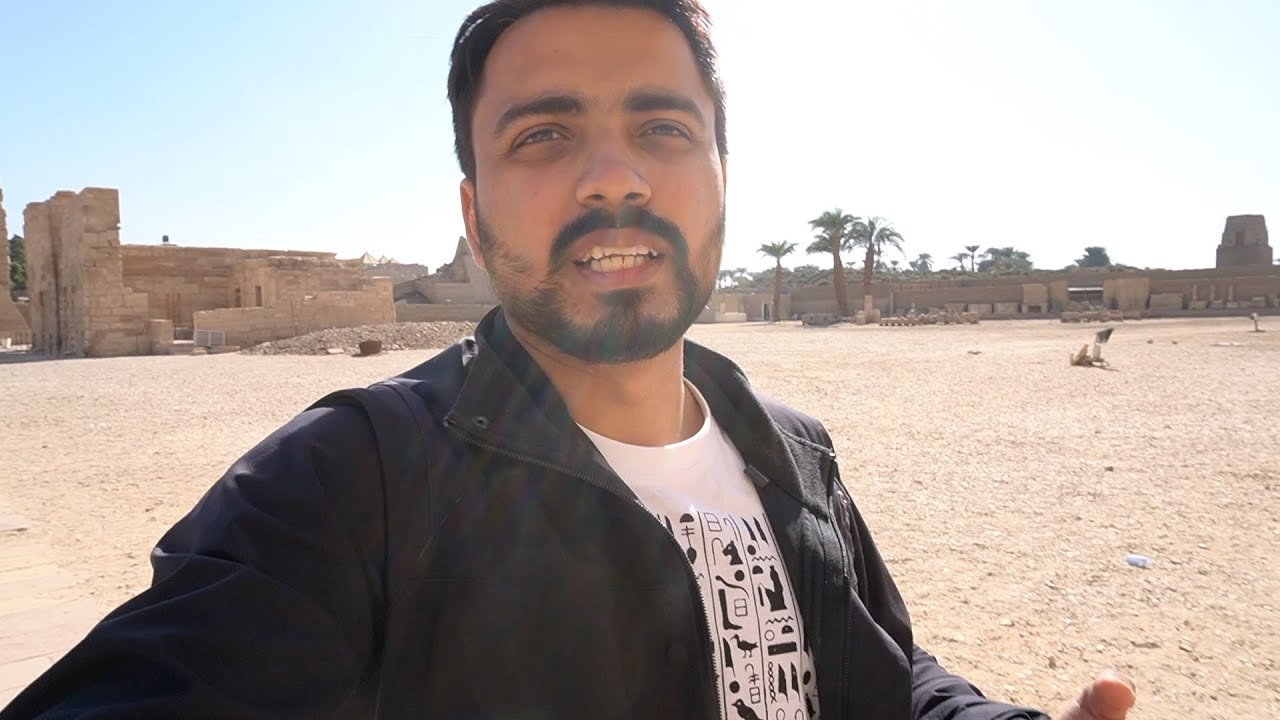
The East Bank — Where Living Meets Ancient
The east bank is Luxor’s beating heart. It is where the city’s population lives, shops, and worships — and where two of the world’s greatest temple complexes stand within a few kilometres of each other. When travellers talk about Luxor east bank vs west bank, they almost always start here, because the energy is easier to navigate and the accommodation options are broader.
Karnak Temple — Egypt’s Largest Religious Site
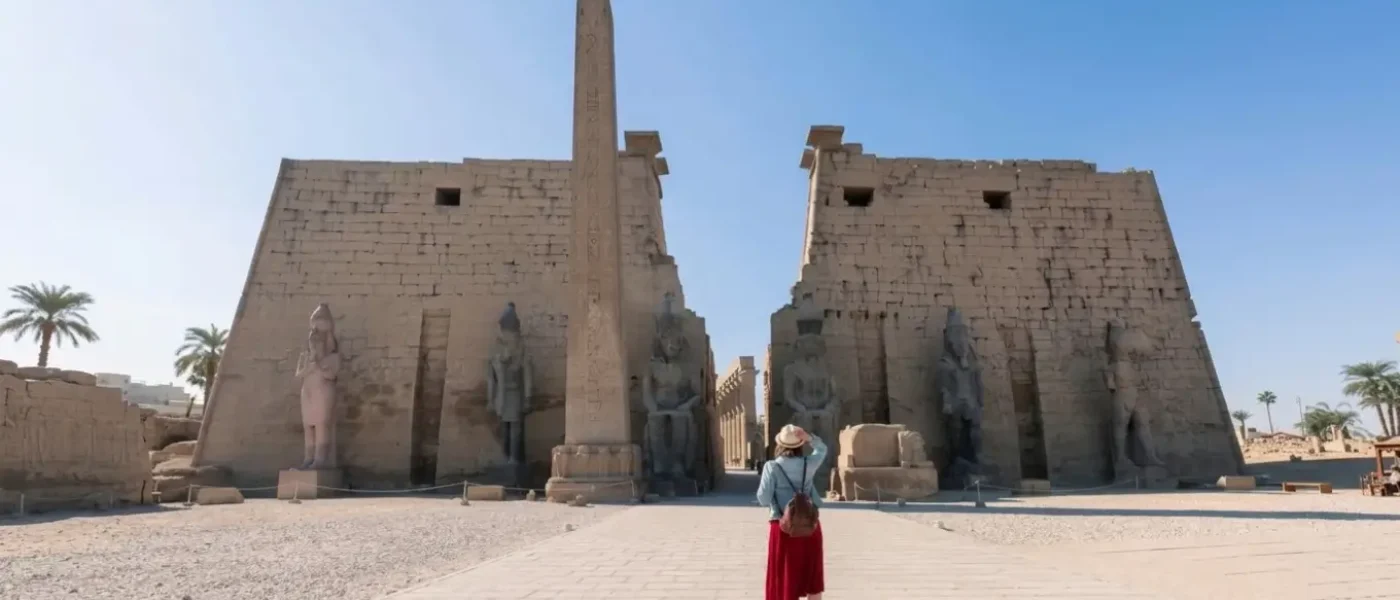
Karnak is not a single temple; it is an entire city of worship covering over 100 hectares and built across 2,000 years of pharaonic history. The Hypostyle Hall alone — 134 columns, each 23 metres tall — stops visitors in their tracks every single time. I have stood inside it hundreds of times and it still makes me feel small in the best possible way. Book a Karnak Temple guided tour and arrive at sunrise: the morning light rakes across the hieroglyphs at an angle that afternoon visitors never see.
Entrance fee: EGP 450 (approx. $9 USD). Opening hours: 6:00 AM – 5:30 PM. Allow at least 2.5 hours.
Luxor Temple — Golden at Sunset
Where Karnak rewards the early riser, Luxor Temple rewards patience. This compact but perfectly preserved complex sits right on the Corniche, overlooking the Nile, and becomes luminous as the sun drops behind the western cliffs. The avenue of sphinxes connecting it to Karnak — recently restored and open for night walks — is one of the most theatrical sights in Egypt. Entrance fee: EGP 360. Opening hours: 6:00 AM – 10:00 PM.
The Avenue of the Sphinxes
Running 3 km between Karnak and Luxor Temple, this recently excavated processional road reconnects the two temples for the first time in 1,500 years. Walking it — or even driving past it — is one of the most striking experiences on the east bank. Entry is included in the Luxor Temple ticket.
East Bank Markets and Souk
Between temple visits, the east bank’s Luxor Souk rewards slow wandering: spices, alabaster, handmade papyrus, and the best coffee in Upper Egypt. Prices are negotiable and vendor pressure is part of the experience. Early morning or late evening gives you the most local atmosphere.
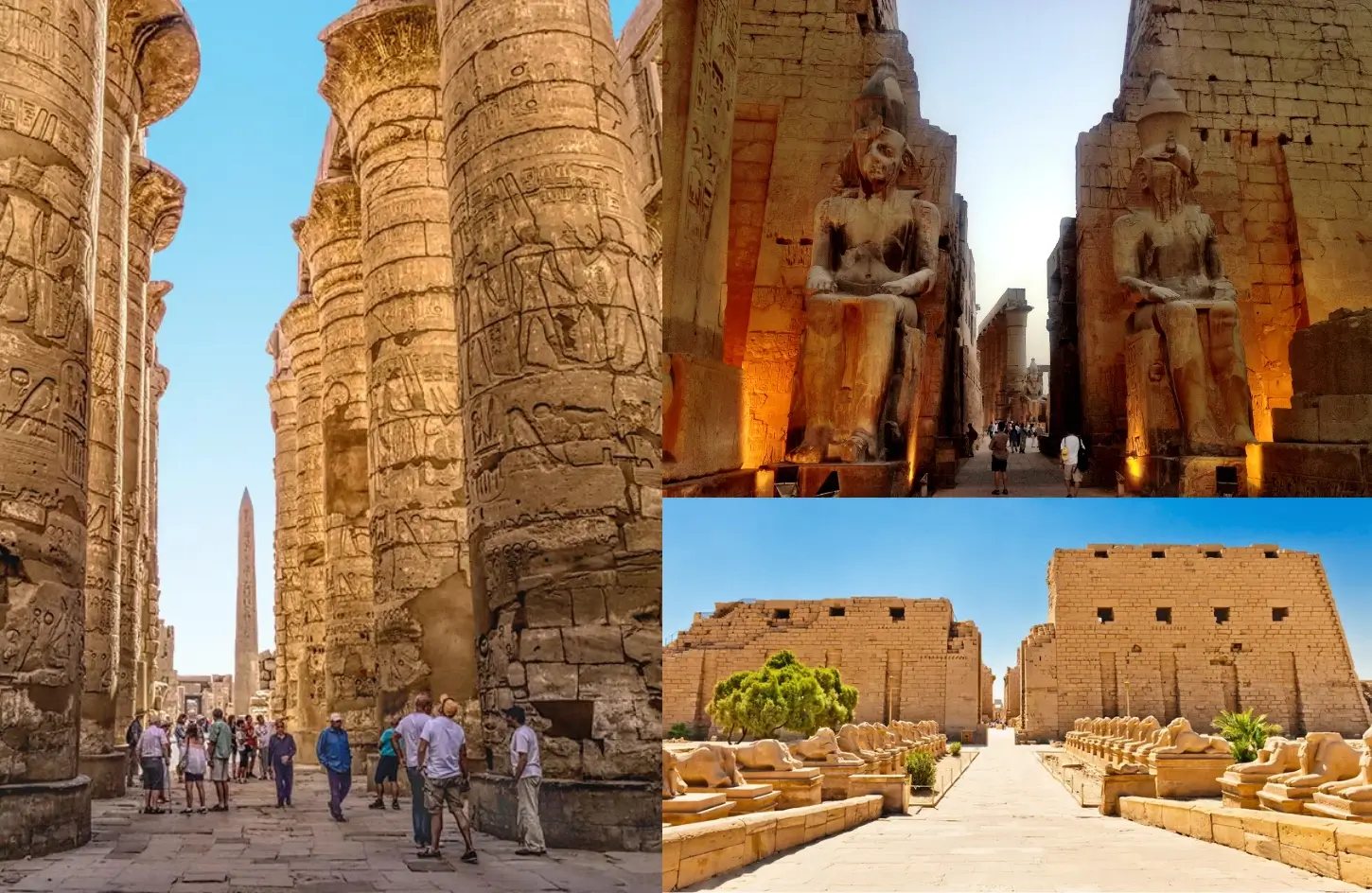
The West Bank — The Realm of the Pharaohs
Cross the Nile and the air changes. The west bank has no major hotels, few restaurants, and almost none of the city noise that follows you on the eastern shore. What it has instead is the most concentrated collection of royal tombs and mortuary temples on earth. In the ongoing debate about Luxor east bank vs west bank, the west is where most travellers say their breath was taken away — usually somewhere inside the Valley of the Kings.
Valley of the Kings — Sixty-three Royal Tombs
The valley holds 63 known tombs, of which roughly 18 are open to visitors at any given time. Your standard ticket includes access to three tombs; Tutankhamun, Seti I, and Ramesses V/VI require separate add-on tickets. Go in — do not skip it because you think you have seen it on TV. The scale, the colour, and the silence underground are impossible to replicate on screen. Standard ticket: EGP 600. Tutankhamun add-on: EGP 400. Open 6:00 AM – 5:00 PM; arrive before 7:30 AM to avoid tour-bus crowds.
Temple of Hatshepsut (Deir el-Bahri)
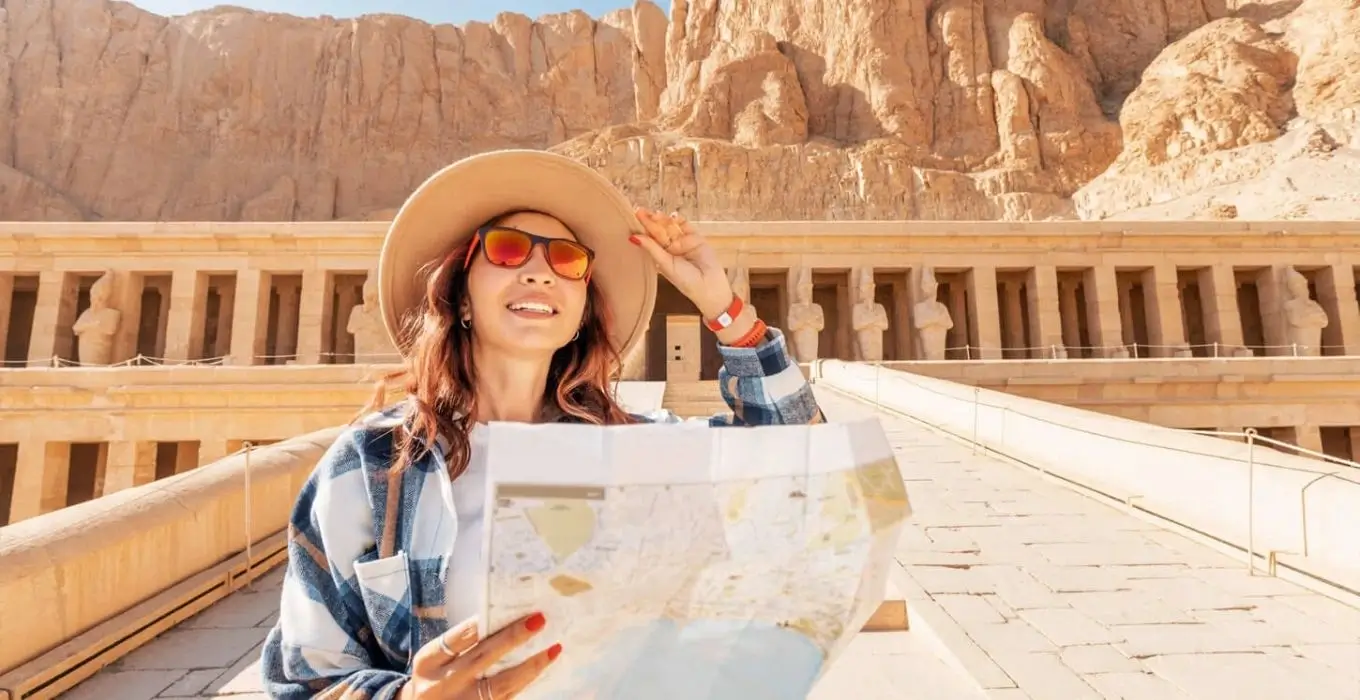
Hatshepsut’s mortuary temple is carved directly into the Theban cliffs in three colonnaded terraces — an architectural feat unmatched in the ancient world. It is five minutes by taxi from the Valley of the Kings and should be on every west bank itinerary. Entrance: EGP 360.
Colossi of Memnon — Free & Unmissable
These two 18-metre quartzite statues of Amenhotep III greet you as you enter the west bank. They are free to visit and make for an excellent quick stop, particularly at dawn when the light is flat and golden. The surrounding site is slowly being excavated — ongoing work here turns up new discoveries every season.
Medinet Habu — Ramesses III’s Hidden Masterpiece
Most visitors walk past Medinet Habu on the way to Hatshepsut. That is a mistake. The coloured relief carvings inside — many still vivid after 3,200 years — are among the best-preserved in Egypt. It is quieter than any site in the valley and, in my opinion, more rewarding than many of the tombs. Entrance: EGP 180.
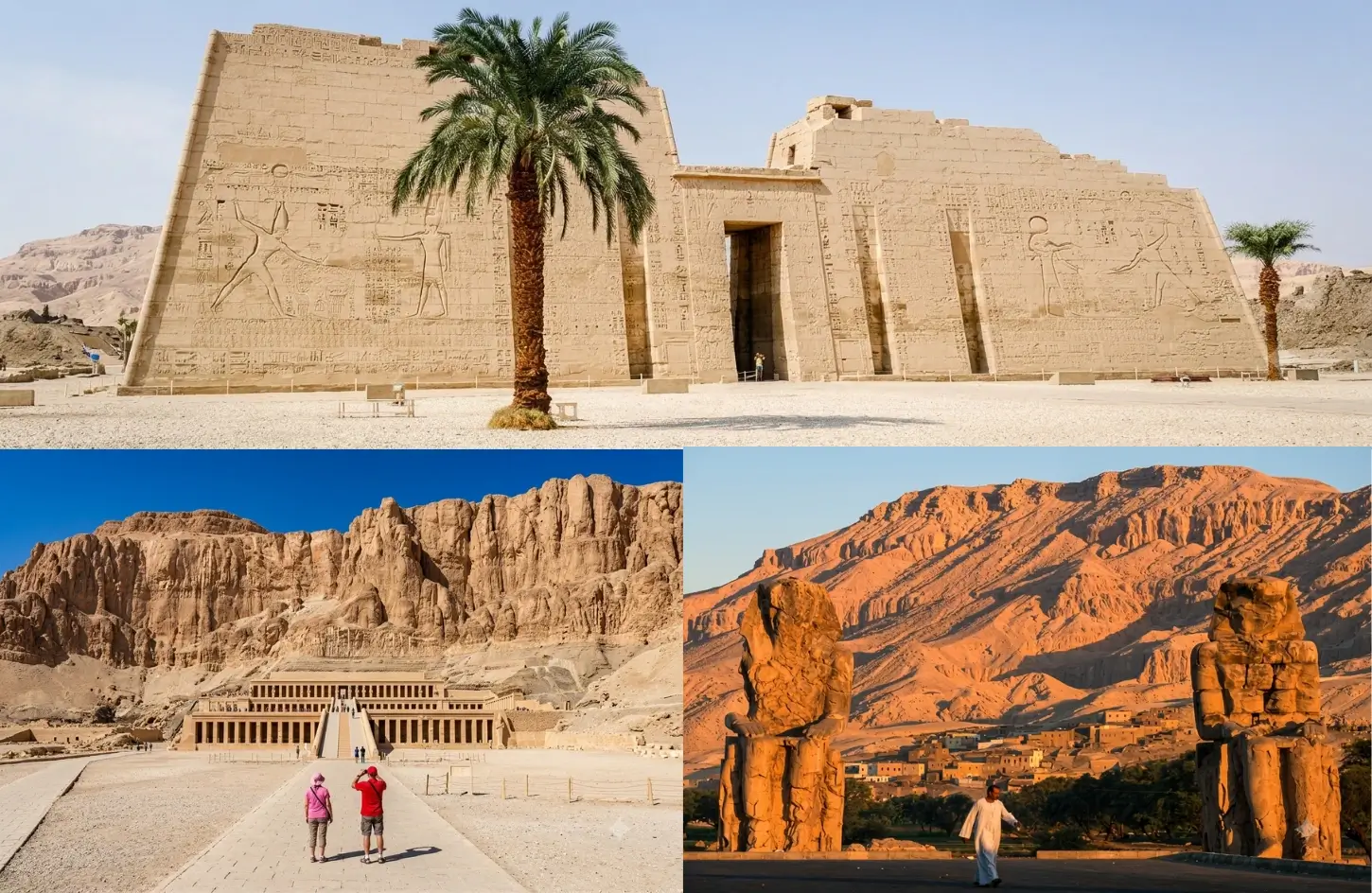
Where the West Bank Fits into a Broader Egypt Itinerary
Luxor is almost always combined with a Nile cruise or extensions to Aswan and Abu Simbel. If you are planning a longer trip, explore our Nile cruise itineraries — most cruises dock at Luxor and give you a day on each bank, though I always recommend arriving a day early to do the east bank justice. Guests who want both Luxor and Aswan in one journey find our combined Egypt tour packages the most efficient option, because transfers, tickets, and guides are pre-arranged.
From Luxor you can also take a day trip south to Edfu and Kom Ombo, or north to the temples at Dendera and Abydos. Our most popular add-on is the Dendera & Abydos day trip from Luxor, which pairs beautifully with a full west bank day. For anything custom — private vehicle, specific tombs, a sunrise felucca — use our tailor-made Egypt tour builder and we will design the itinerary around your pace.
Which Side Should You Visit First?
My honest advice after twenty years: start with the west bank.
Here’s why: the west bank sites are best visited very early in the morning before the heat and crowds build. If you start on the east bank (temples open at 6 AM too), you’ll miss the sweet spot in the Valley of the Kings. By visiting the west bank first, you can cross back to the east bank by noon and explore Karnak in the late afternoon — catching Luxor Temple perfectly at sunset.
If you only have one day: take the combined West & East Banks full-day tour. It is exhausting but possible, and our guides pace it intelligently.
→ Book the Luxor West & East Banks full-day tour — the most efficient way to see both sides in a single day.
How to Cross Between the Banks
The Nile separates the two banks by roughly 800 metres at Luxor. There are three ways to get across, each with different trade-offs.
| Method | Cost | Time | Best for |
| Local public ferry | EGP 5 per person | 8–12 min | Solo travellers, those who want a local experience |
| Private motor boat | EGP 60–100 | 10 min | Small groups; flexible departure times |
| Taxi via Luxor Bridge | EGP 40–60 per taxi | 30–40 min | Luggage, families, late-night return trips |
My recommendation: take the public ferry from the East Bank dock (near Luxor Temple) in the morning and return by taxi after a long day on the west bank. The ferry at dawn, with the mountains of the necropolis turning pink in the distance, is one of those simple moments that stays with you. For a more romantic version, book a felucca ride on the Nile in Luxor and combine your crossing with a sunset sail.
Suggested Itineraries
One Day in Luxor — The Essential Run
If you only have one day, do not split it between both banks — you will exhaust yourself and see nothing properly. Choose the west bank (it has more sites that require early access) and use the afternoon for Luxor Temple at dusk. Alternatively, book our full-day east and west bank tour — it is designed precisely for one-day visitors and hits the essential stops on both sides without rushing.
One-Day West + East Plan 6:00 AM — Ferry to west bank 6:30 AM — Valley of the Kings (2.5 hrs) 9:30 AM — Temple of Hatshepsut (1 hr) 10:30 AM — Colossi of Memnon (20 min) 11:00 AM — Taxi back via bridge; lunch + rest 4:00 PM — Karnak Temple 7:00 PM — Luxor Temple at sunset
Two Days — The Comfortable Pace
Day one: east bank only — Karnak at sunrise, Luxor Museum mid-morning, Luxor Temple at sunset. Day two: west bank — Valley of the Kings, Hatshepsut, Medinet Habu (do not skip it), and a walk through Gurna village. Two days is the minimum I recommend to anyone who wants to actually absorb what they are seeing.
Three Days — Adding the Day Trips
With three days you can add either the Dendera and Abydos temples north of Luxor or a day trip to Aswan from Luxor. I prefer Dendera and Abydos for the majority of visitors because both temples are relatively uncrowded and the painted reliefs at Dendera are extraordinary. Three full days in Luxor also gives you an afternoon for the Luxor hot air balloon ride at dawn over the west bank — one of the most iconic views in Egypt.
Where to Stay: East or West Bank?
Stay on the east bank if this is your first visit to Luxor. The hotel choice is broader, the restaurants are better, and you will not need to plan your entire day around ferry timetables. The Sofitel Winter Palace (built 1886, directly on the Nile) is the most atmospheric luxury option. For mid-range, the Steigenberger Nile Palace has large rooms and a pool — essential in summer.
Stay on the west bank if you are a return visitor, a photographer, or someone who genuinely values silence over convenience. Al Moudira Hotel is a desert-palace-style guesthouse with beautiful architecture and a pool; Villa Nile House is smaller and family-run, with excellent home-cooked meals. Waking up 500 metres from the Valley of the Kings with no traffic noise is an experience that is difficult to describe to someone who has not tried it.
For travellers arriving by boat, our 5-star Nile cruise packages dock on the east bank and include guided shore excursions to both sides — the most seamless way to handle the logistics.
Practical Information (2026)
| Site | Bank | Entrance Fee (EGP) | Opens | Allow |
| Karnak Temple | East | 450 | 6:00 AM | 2.5 hrs |
| Luxor Temple | East | 360 | 6:00 AM | 1.5 hrs |
| Luxor Museum | East | 200 | 9:00 AM | 90 min |
| Valley of the Kings (3 tombs) | West | 600 | 6:00 AM | 2.5 hrs |
| Tutankhamun tomb (add-on) | West | 400 | 6:00 AM | 30 min |
| Temple of Hatshepsut | West | 360 | 6:00 AM | 1 hr |
| Medinet Habu | West | 180 | 6:00 AM | 1 hr |
| Colossi of Memnon | West | Free | Always | 20 min |
Dress code: Shoulders and knees covered at all temple sites. Light, breathable fabric — linen or cotton — is far more practical than synthetic sportswear in the heat.
Best months to visit: October through April. Summer (June–August) sees temperatures above 42°C — not impossible, but you will need to start before 6:30 AM and be back indoors by noon.
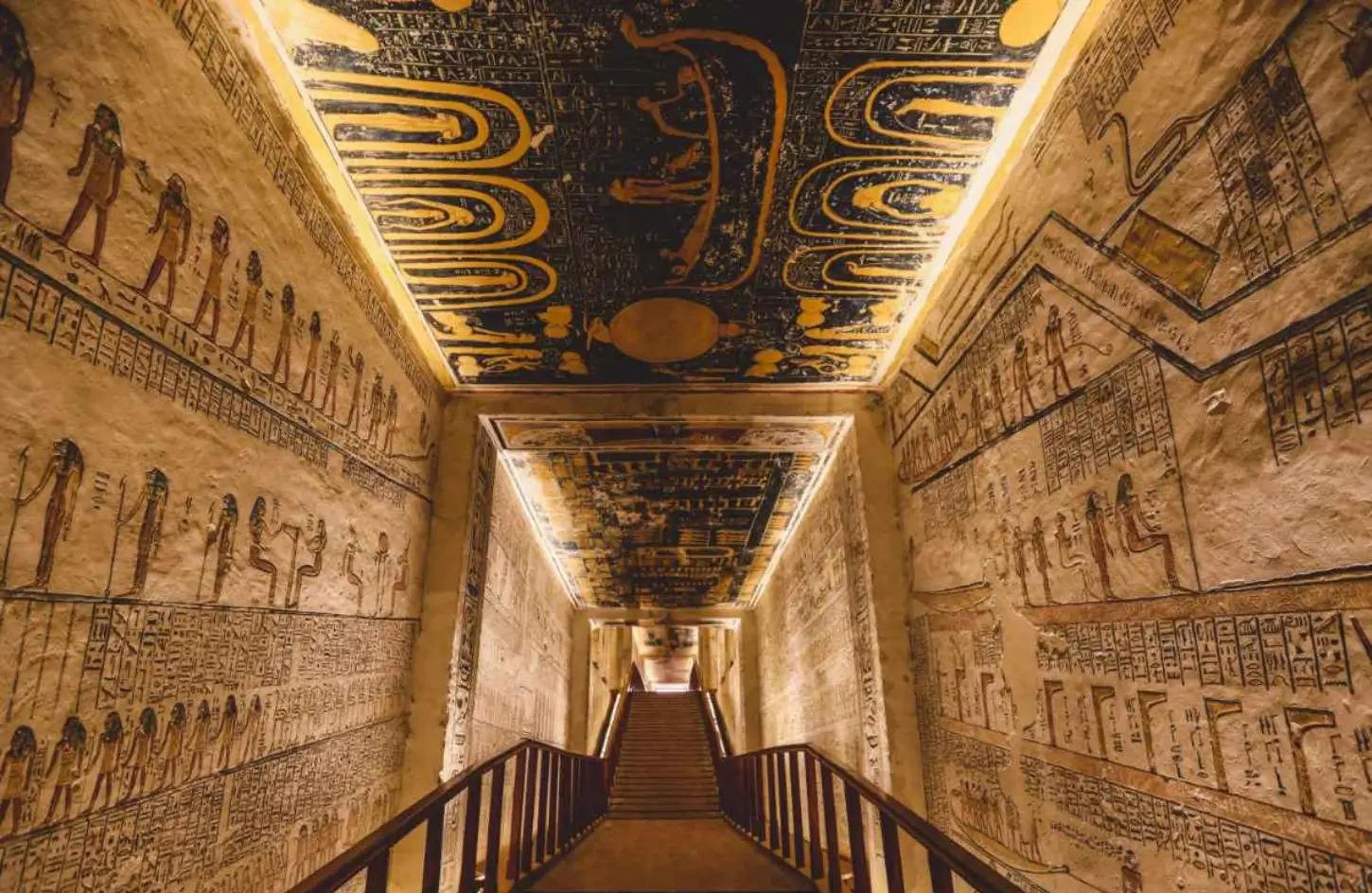
Hidden Gems and Local Secrets
Hot Air Balloon Over the West Bank
Launching at dawn over the Theban Hills and drifting above the Valley of the Kings is one of Egypt’s most unforgettable experiences. You see both banks spread out below you, the Nile reflecting the rising sun, and the desert extending towards the horizon.
Medinet Habu (Usually Missed)
The mortuary temple of Ramesses III at Medinet Habu is one of the best-preserved temples in Egypt and consistently uncrowded. The painted interior reliefs — showing battle scenes and royal rituals — are extraordinarily vivid. Free yourself from the usual itinerary and spend an hour here. It will be one of your best memories from the west bank.
Karnak Sound & Light Show
An evening option not to miss: the sound and light show at Karnak illuminates the temples after dark with narration walking you through 3,000 years of history. It is theatrical and absolutely spectacular from the sacred lake viewpoint.
→ Book the Karnak Sound and Light show tour.
Practical Tips: Tickets, Timing, and Transport
| Site | Opening Hours | Approx. Entrance Fee (2026) | Time Needed |
| Karnak Temple | 6:00 AM – 5:30 PM | 220 EGP (~$7) | 2–3 hours |
| Luxor Temple | 6:00 AM – 10:00 PM | 160 EGP (~$5) | 1.5 hours |
| Valley of the Kings | 6:00 AM – 5:00 PM | 240 EGP (3 tombs) | 2–3 hours |
| Temple of Hatshepsut | 6:00 AM – 5:00 PM | 140 EGP (~$4.50) | 1–1.5 hours |
| Colossi of Memnon | Always accessible | Free | 20 minutes |
| Tomb of Nefertari | 6:00 AM – 5:00 PM | 1,500 EGP (~$48) | 45 minutes |
| Seti I Tomb | 6:00 AM – 5:00 PM | 1,500 EGP (~$48) | 45 minutes |
| Medinet Habu | 6:00 AM – 5:00 PM | 100 EGP (~$3) | 1 hour |
Practical dress code: shoulders and knees covered at all sites. Lightweight breathable clothing in summer; a light layer for early mornings in winter (December–February can be cool at 6 AM). Always carry water — the sites have limited shade.
Where to Stay: East Bank vs West Bank Hotels
Your accommodation choice affects your daily rhythm more than most travellers expect.
East Bank — Hotels with Nile Views and City Convenience
The Sofitel Winter Palace (built 1886) remains the grandest address on the Nile — history and luxury in equal measure, five minutes from Luxor Temple. The Steigenberger Nile Palace is a strong modern alternative with a large pool. Budget travellers are well-served by a range of guesthouses along the corniche.
Best for: first-time visitors, those wanting restaurant choice and evening atmosphere, anyone prioritising convenience.
West Bank — Guesthouses with Desert Quiet
Al Moudira Hotel is the west bank’s standout property: a privately owned boutique hotel with stunning Syrian-inspired architecture and lush gardens. Villa Nile House and several family-run guesthouses offer simple, authentic stays. The pace here is slower, mornings are quieter, and you wake up already at the tombs.
Best for: travellers who want immersion, photographers, and those spending multiple days on the west bank.
→ Prefer a Nile cruise between Luxor and Aswan? Browse Nile cruise itineraries — your floating hotel gives you both banks and the river at once.
Extending Your Trip Beyond Luxor
Luxor sits at the centre of Upper Egypt’s greatest sites. From here, the natural extensions are:
- Day trip to Aswan — Philae Temple, High Dam, and Unfinished Obelisk (12-hour day trip)
- Edfu & Kom Ombo day trip — Horus Temple and the crocodile temple in one long day
- Dendera & Abydos from Luxor — two temples rarely on the mainstream circuit, both extraordinary
Final Word: What I Tell Every Visitor
The question is never really ‘east bank or west bank.’ The question is how much time you have — because Luxor always asks for more than you planned to give.
If you have one day, take the combined full-day tour and let a guide carry the logistics while you absorb the history. If you have two or three days, slow down, let the west bank’s silence settle around you, and sit with a cup of tea watching the sunset from the east bank corniche.
Egypt has been waiting three thousand years. She is patient. But don’t wait too long yourself.
Frequently Asked Questions
Is it better to stay on the east bank or west bank of Luxor?
For most first-time visitors, the east bank is the more practical base. It has the widest choice of hotels, restaurants, and transport links. The west bank is ideal if you want quiet mornings and a deeper sense of the ancient world — it suits travellers spending two or more days focused on tombs and archaeological sites.
How long do I need to see both sides of Luxor?
A realistic minimum is two full days — one day per bank. Three days is more comfortable and lets you see the Valley of the Kings properly, explore Karnak without rushing, and still have time for Medinet Habu or a felucca ride on the Nile. One day is possible with a guided combined tour but will be intensive.
What is the best time to visit the Valley of the Kings?
Arrive at opening — 6:00 AM. By 9:00 AM the valley heats up rapidly and tour groups fill the paths. Early arrival means cooler temperatures, better light inside the tombs, and far fewer people competing for space at the entrances.
How do you get from the east bank to the west bank in Luxor?
Three options: the public local ferry (5 EGP, 10 minutes, runs from morning to evening), a private motorboat (negotiated, approximately 50–100 EGP), or a taxi across the Luxor Bridge (30–40 minutes, approximately 200–300 EGP for the car). The ferry is the most atmospheric; the taxi is most practical for groups or when time is tight.
Do I need a guide to visit the Valley of the Kings?
Technically no — tickets are available at the gate. But the Valley of the Kings without a guide is a frustrating experience for most visitors: the hieroglyph-covered walls mean almost nothing without context. A licensed Egyptologist transforms a walk through decorated corridors into an understanding of ancient Egyptian beliefs about death, resurrection, and the afterlife. It is money very well spent.
Are Karnak Temple and Luxor Temple on the same ticket?
In 2026 they are separately ticketed. Karnak costs approximately 220 EGP and Luxor Temple approximately 160 EGP. Check the Egyptian Ministry of Tourism website for the most current pricing as fees are revised periodically.
Can I visit Luxor as a day trip from Hurghada?
Yes. A Hurghada to Luxor day trip typically takes 3–3.5 hours each way by private car. You can cover the Valley of the Kings and Karnak in a long day. It is tiring but popular and worthwhile if Luxor is not on your main itinerary.
What should I wear visiting Luxor temples and tombs?
Lightweight, loose-fitting clothes that cover shoulders and knees are both respectful and practical. Comfortable walking shoes (the sites involve significant walking on uneven ground), a hat, and sunscreen are essential. In December to February, bring a light jacket for early morning visits.