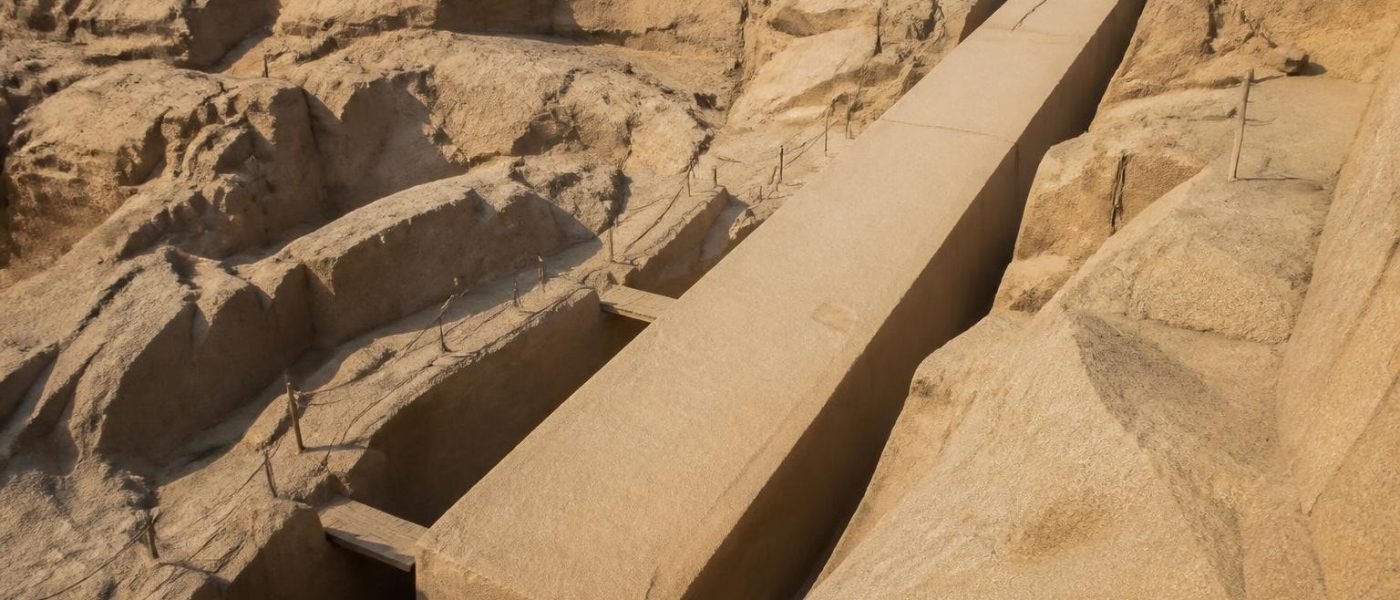
The aswan unfinished obelisk stands as one of ancient Egypt's most remarkable archaeological sites, not for what was achieved, but for what nearly was. Lying in the ancient granite quarries on the eastern bank of the Nile in Aswan, this colossal monument was abandoned mid-creation over 3,500 years ago. At approximately 42 metres long and weighing an estimated 1,200 tonnes, it would have been the largest single piece of stone ever fashioned by ancient Egyptian craftsmen. Today, this silent giant offers modern visitors an unprecedented window into the stone-working techniques, engineering ambitions, and monumental challenges faced by the builders of pharaonic Egypt.
The Discovery and Historical Significance
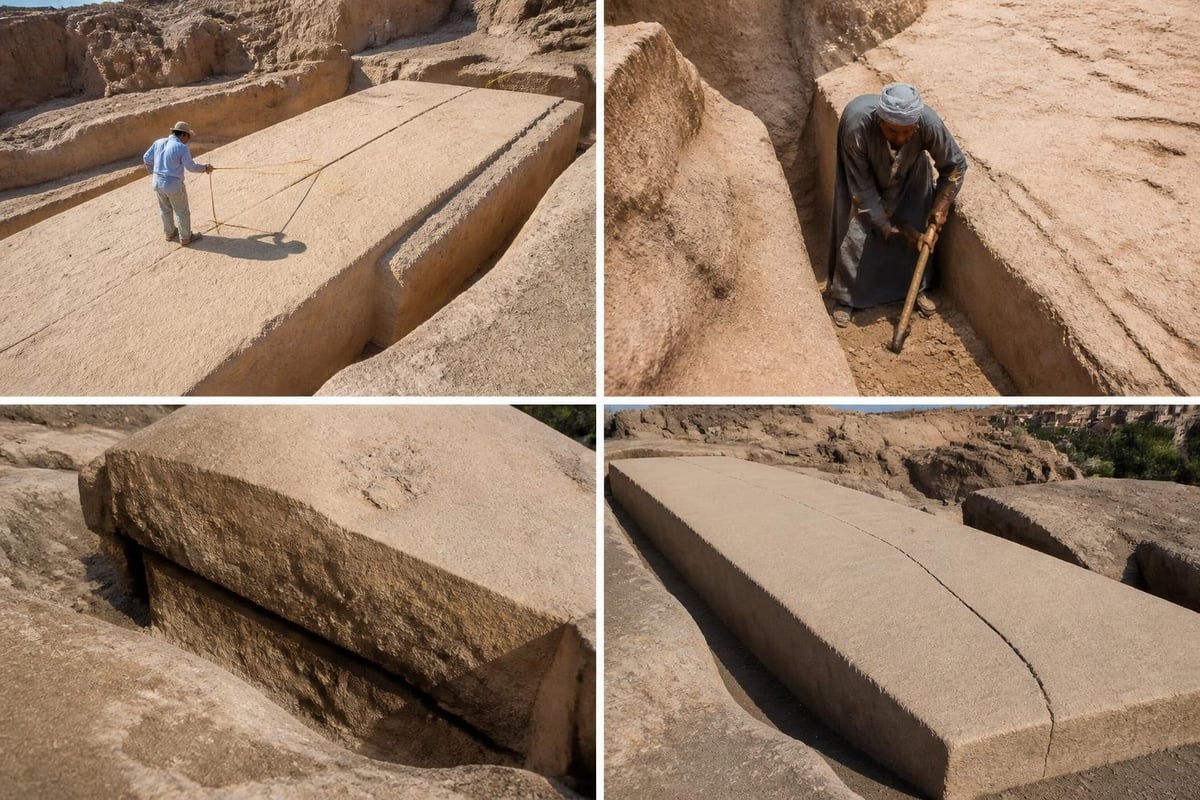
The unfinished obelisk remained partially concealed beneath sand and debris until systematic archaeological work began in the early 20th century. The official clearance and early documentation of the site revealed not just a single abandoned monument, but an entire ancient quarrying operation frozen in time.
Archaeologists determined that the obelisk was likely commissioned during the reign of Hatshepsut (circa 1473–1458 BCE), one of ancient Egypt's most powerful female pharaohs. The monument was intended to complement a pair of obelisks already erected at Karnak Temple in Luxor, creating a trio of monuments that would have been unmatched in scale and grandeur.
Why It Matters to Egyptology
The aswan unfinished obelisk provides irreplaceable evidence of ancient quarrying methods that would otherwise remain theoretical. Unlike completed monuments that show only the finished product, this abandoned work reveals:
- Tool marks preserved exactly as workers left them over three millennia ago
- The step-by-step progression of ancient stone extraction techniques
- Evidence of how workers identified and responded to flaws in the granite
- The organisation and scale of labour required for monumental projects
Recent geological analysis of the Aswan granitoids has enhanced our understanding of why this particular quarry was chosen and how the properties of the local rock influenced ancient engineering decisions.
The Engineering Marvel Behind Ancient Obelisks
Creating an obelisk of this magnitude required extraordinary technical knowledge and organisational capability. The ancient Egyptians selected Aswan's red granite for its durability, beauty, and the symbolic association between its colour and the sun god Ra.
The Quarrying Process
Workers began by identifying a suitable section of bedrock free from visible cracks or inclusions. They then outlined the obelisk's shape on the granite surface using measurements and proportions carefully calculated to ensure structural integrity.
The actual extraction involved several labour-intensive stages:
- Creating trenches around the obelisk's perimeter using dolerite pounders, harder stones that could pulverise the granite through repeated striking
- Hammering wooden wedges into slots cut along the trenches, then soaking them with water to expand and crack the stone
- Undercutting the base by creating tunnels beneath the monument to separate it from the bedrock
- Final separation intended to free the obelisk for transport to the Nile
| Stage | Method | Estimated Time | Labour Force |
|---|---|---|---|
| Surveying and marking | Copper tools, pigments | 2-3 weeks | 10-15 engineers |
| Trench creation | Dolerite pounders | 6-9 months | 100-150 workers |
| Undercutting | Copper chisels, fire-setting | 3-4 months | 50-75 workers |
| Separation (intended) | Wooden wedges, levers | 2-3 weeks | 100+ workers |
The University of Memphis documentation provides detailed measurements showing how precisely ancient engineers calculated angles and proportions even at this massive scale.
Why the Obelisk Was Abandoned
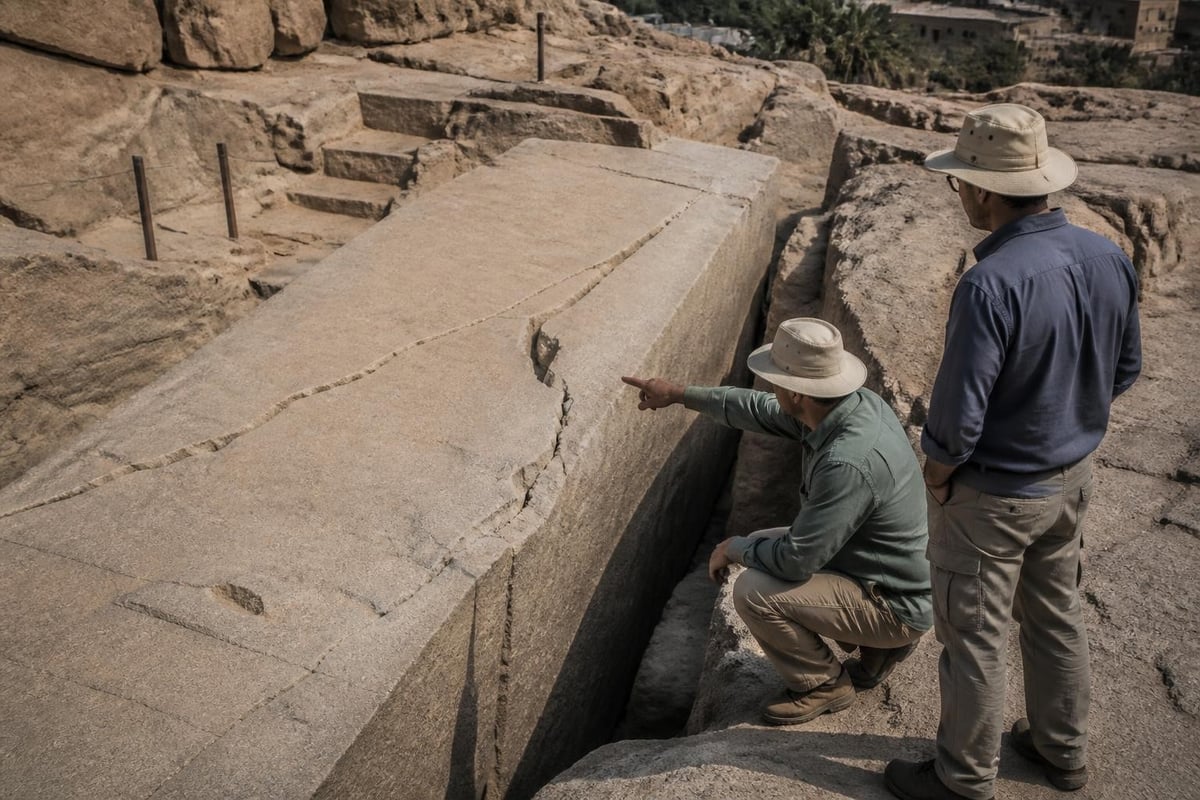
The aswan unfinished obelisk never left its granite cradle because of a catastrophic discovery made during the final stages of extraction. As workers progressed with undercutting the base, a series of cracks appeared in the stone. These fissures, invisible during the initial survey, compromised the structural integrity of the entire monument.
The fatal flaws included:
- A major crack running diagonally across the obelisk's upper section
- Secondary fractures appearing near the base during undercutting
- Natural weaknesses in the granite exposed by the extraction process itself
Rather than risk the lives of workers attempting to transport a compromised monument, or waste further resources on a flawed project, the decision was made to abandon the work entirely. The site was left as is, tools discarded, trenches incomplete.
This practical decision, devastating to those who had invested months or years of labour, became an invaluable gift to future archaeologists and historians. Modern research on obelisk restoration and engineering has used the unfinished monument to test theories about ancient construction methods.
Visiting the Unfinished Obelisk Today
The site is located in the Northern Quarries of Aswan, approximately 2 kilometres from the city centre. The Ministry of Tourism and Antiquities has developed the location into an accessible open-air museum that allows visitors to walk directly on the ancient granite and observe the monument from multiple angles.
What You'll Experience
Walking through the quarry, you descend into the excavation area where the obelisk still lies attached to bedrock. The sheer scale becomes apparent only when standing beside it. At 42 metres, the monument is longer than most buildings, yet it lies in a trench barely wide enough for workers to have manoeuvred around it.
Modern walkways and viewing platforms allow you to observe:
- The tool marks left by bronze and copper chisels
- Channels carved for wooden wedges
- The progression of work from rough shaping to fine finishing
- Smaller, partially extracted obelisks nearby that provide context for the quarrying industry
The site typically requires 60-90 minutes to explore thoroughly. Many visitors combine it with other things to do in Aswan, creating a comprehensive understanding of the region's ancient and modern significance.
Aswan's Broader Quarrying Legacy
The unfinished obelisk represents just one project among thousands conducted in Aswan's quarries over three millennia. This region supplied granite for temples, statues, sarcophagi, and architectural elements throughout Egypt and beyond.
Other Notable Monuments from Aswan Granite
| Monument | Location | Date | Weight |
|---|---|---|---|
| Lateran Obelisk | Rome (originally Karnak) | c. 1450 BCE | 455 tonnes |
| Pompey's Pillar | Alexandria | 297 CE | 285 tonnes |
| Ramesses II Colossus | Memphis | c. 1250 BCE | 83 tonnes |
| Sarcophagus of Khufu | Great Pyramid, Giza | c. 2560 BCE | 3.75 tonnes |
Archaeological evidence throughout the quarries shows that workers identified and marked promising sections of granite, sometimes decades or centuries before extraction began. Academic analysis of obelisk history reveals how the tradition of creating these monuments evolved and eventually declined with Egypt's changing political fortunes.
The quarries remained active into the Greco-Roman period, with demand for Egyptian granite extending across the Mediterranean world. Today, the landscape is dotted with partially extracted blocks, abandoned projects, and inscriptions left by ancient work crews.
The Technical Achievement in Context
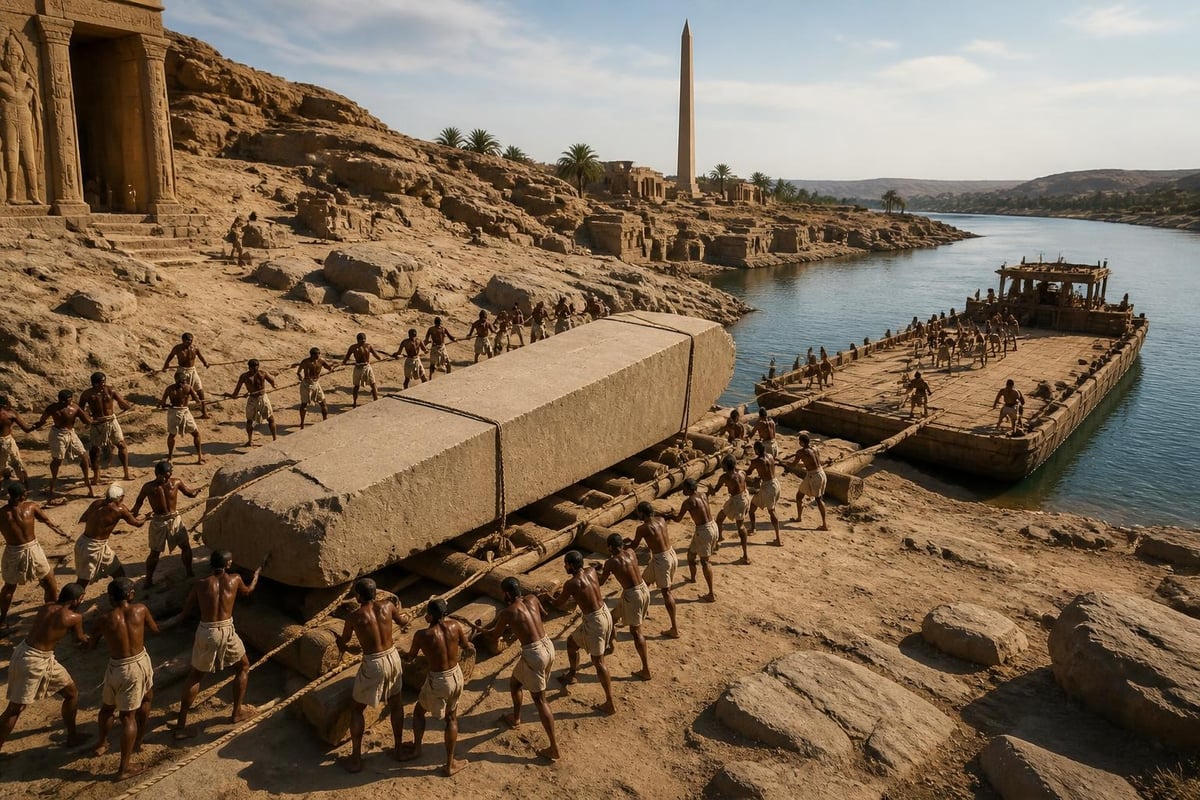
To appreciate the ambition behind the aswan unfinished obelisk, consider that if completed, it would have weighed more than 1,200 tonnes. Transporting this mass from quarry to river, loading it onto a specially constructed barge, floating it 200 kilometres downstream to Luxor, unloading it, and then erecting it vertically would have required engineering solutions that pushed ancient technology to its absolute limits.
Transportation Challenges
Ancient Egyptians successfully moved obelisks weighing up to 455 tonnes (the Lateran Obelisk). The unfinished monument would have exceeded this by nearly threefold. Engineers would have needed to:
- Construct a causeway from quarry to river capable of bearing extreme weight
- Build a barge large enough to remain stable whilst carrying the obelisk
- Time the transport during the Nile's flood season when water levels were highest
- Design erection mechanisms involving ramps, counterweights, and precise calculations
Some scholars believe the project was abandoned precisely because these challenges were deemed insurmountable with available resources and technology.
Planning Your Visit
When incorporating the unfinished obelisk into your Aswan itinerary, timing and context matter significantly. The site works beautifully as part of a comprehensive exploration of Aswan's archaeological treasures.
Most travellers find that spending two days in Aswan allows adequate time for the quarries, Philae Temple, the High Dam, and either a felucca ride or Nubian village visit. The quarry site is particularly impressive in morning light, when shadows accentuate the tool marks and the granite's pink hues are most vivid.
Practical considerations include:
- The site offers minimal shade, so bring sun protection and water
- Comfortable walking shoes are essential for navigating the uneven granite surfaces
- Photography is permitted and highly rewarding
- An experienced guide can point out details easily missed by independent visitors
Travellers planning longer Egypt itineraries often include Aswan as part of journeys that encompass Luxor’s magnificent temples and either continue south to Abu Simbel or cruise northward along the Nile.
The Cultural Impact and Modern Relevance
The aswan unfinished obelisk continues to inspire contemporary discussions about ancient achievement, technological limits, and the nature of monumental architecture. It appears in academic research, documentary films, and educational materials worldwide.
What Modern Engineering Can Learn
Contemporary engineers study the unfinished obelisk to understand:
- Material properties of Aswan granite under stress
- The relationship between ancient tools and work rates
- How pre-industrial societies managed massive projects
- Risk assessment in monumental architecture
The monument also serves as a humbling reminder that even the most skilled civilisations faced projects beyond their capabilities. The decision to abandon rather than persist demonstrates a practical wisdom often overlooked in narratives that emphasise only successful achievements.
Combining Ancient and Modern Aswan
Beyond its ancient wonders, Aswan offers a distinctive character among Egyptian cities. The Nubian influence is visible in architecture, cuisine, and cultural traditions. The modern High Dam, completed in 1970, created Lake Nasser and fundamentally altered the region's hydrology and economy.
Many visitors appreciate experiencing this blend of timescales. Walking amongst the unfinished obelisk's ancient granite in the morning, then observing the modern engineering triumph of the High Dam in the afternoon, provides perspective on how each generation confronts challenges with available resources.
For those planning visits during extraordinary celestial events, Aswan and Luxor will be positioned directly under the path of totality for the 2 August 2027 total solar eclipse. This rare alignment has sparked interest in Egypt Total Solar Eclipse Tours 2027, combining ancient monuments with astronomical phenomena in packages that span multiple days and destinations.

Preservation and Future Research
Egyptian authorities continue to monitor and preserve the unfinished obelisk site. Weathering, particularly from occasional rainfall and temperature fluctuations, poses ongoing challenges to the granite's surface. Conservation efforts focus on maintaining the site's authenticity whilst protecting tool marks and inscriptions from further erosion.
Recent official documentation from the Ministry of Tourism and Antiquities outlines preservation strategies and visitor management plans designed to balance access with conservation.
Future research opportunities include:
- Advanced 3D scanning to document every surface detail
- Geochemical analysis of tool marks to identify specific implements used
- Experimental archaeology replicating ancient techniques
- Comparative studies with other abandoned quarry projects
Each technological advancement in archaeological methods reveals new details about this 3,500-year-old construction site, ensuring that the aswan unfinished obelisk continues to teach new lessons about ancient Egyptian civilisation.
The Human Story Behind the Stone
Perhaps the most poignant aspect of the unfinished obelisk is the human element. Hundreds of workers devoted months or years to this project, believing they were creating something unprecedented. The moment when cracks appeared must have brought crushing disappointment to craftsmen who had invested extraordinary skill and effort.
Yet their labour was not wasted. The incomplete monument speaks more eloquently about ancient Egyptian engineering than many completed works. It reveals the decision-making processes, the technical challenges, and the practical wisdom that characterised this sophisticated civilisation.
Standing beside the monument today, visitors often report a powerful connection to those ancient workers. The tool marks are so fresh, the work so evidently interrupted mid-task, that the site feels more like a paused project than an ancient ruin. This immediacy makes the unfinished obelisk uniquely accessible among Egypt's monumental sites.
The aswan unfinished obelisk offers visitors an authentic glimpse into the ambitions, capabilities, and practical limits of ancient Egyptian civilisation. Whether you're fascinated by engineering, drawn to archaeological mysteries, or simply seeking to understand how monuments like those at Karnak and Luxor were created, this abandoned project delivers insights available nowhere else. My Way To Egypt specialises in creating immersive experiences throughout Aswan, Luxor, and beyond, with expert Egyptologists who bring sites like the unfinished obelisk to life through detailed knowledge and engaging storytelling. We handle every detail of your journey, allowing you to focus on experiencing Egypt's wonders with confidence and depth.