The journey between Aswan and Luxor offers more than scenic Nile views; it delivers one of Egypt's most architecturally unique temples. Kom Ombo stands apart from every other ancient Egyptian sanctuary, a perfectly symmetrical double temple honouring two distinct deities under one roof. Located approximately 50 kilometres north of Aswan, this Ptolemaic marvel offers visitors a fascinating glimpse into dual religious practice, ancient medical knowledge, and the sacred role of crocodiles in pharaonic Egypt. Whether you're aboard a Nile cruise or exploring by road, the aswan kom ombo route reveals a temple that challenges conventional Egyptian temple design with its mirror-image sanctuaries, while the adjacent Crocodile Museum adds a modern interpretive layer to this 2,000-year-old site.
The Architectural Uniqueness of Kom Ombo Temple
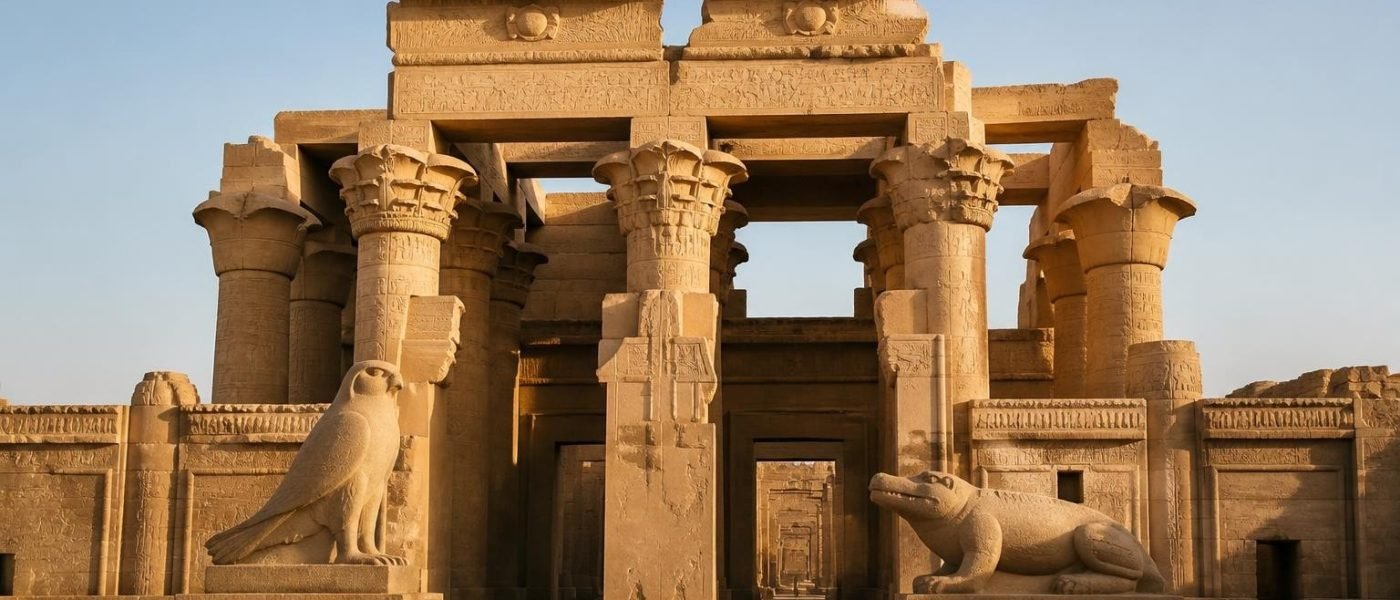
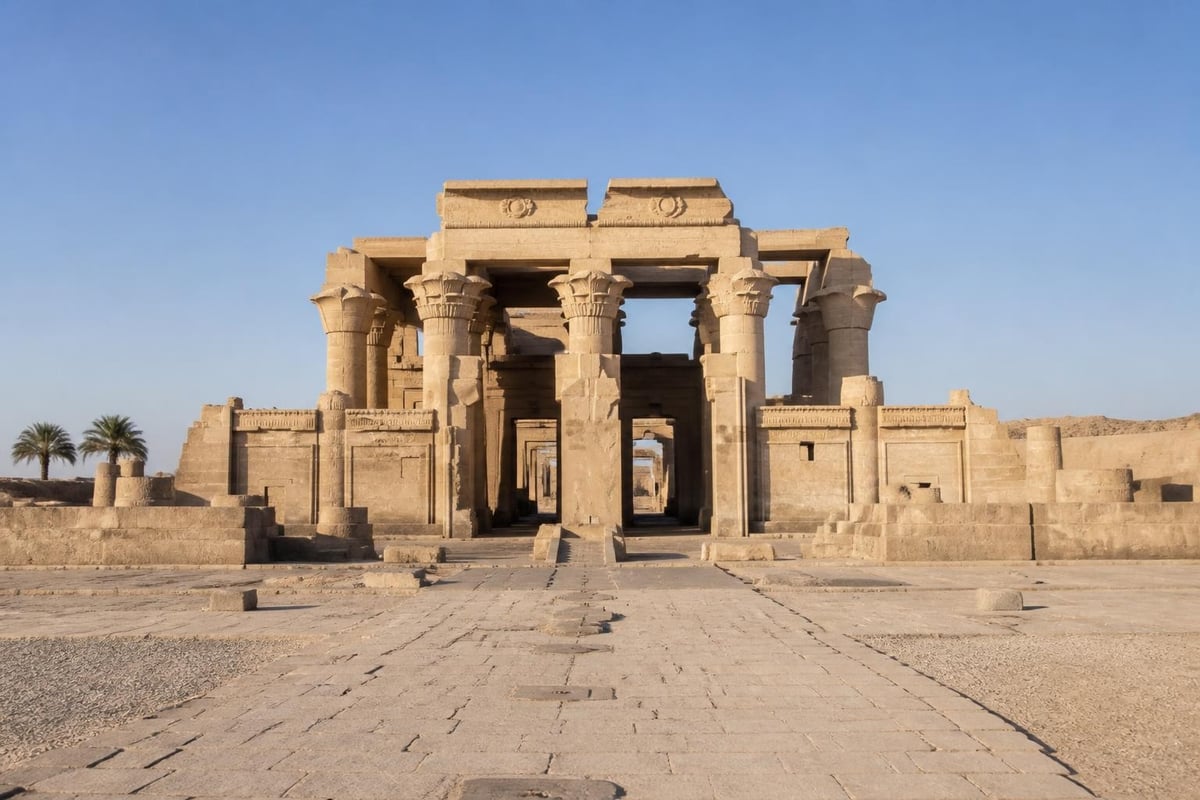
Kom Ombo's defining feature is its perfect bilateral symmetry, a rarity in ancient Egyptian religious architecture. The temple divides down its central axis into two identical halves, each dedicated to a separate deity with its own entrance, hypostyle halls, and sanctuary.
The southern section honours Sobek, the crocodile god associated with fertility, protection, and the Nile's power. The northern half belongs to Horus the Elder (Haroeris), the falcon-headed sky god linked to kingship and the heavens. This dual dedication created matching sets of courtyards, columns, and inner chambers throughout the complex.
Design Symmetry and Ptolemaic Construction
Built primarily during the Ptolemaic dynasty (180-47 BCE) with later Roman additions, the temple showcases Greco-Egyptian architectural fusion. Visitors approaching from the Nile first encounter the outer court, added during Roman times, before passing through the original Ptolemaic entrance.
Key architectural elements include:
- Double entrance pylons (now largely destroyed)
- A shared forecourt with twin altars
- Dual hypostyle halls with decorated columns
- Parallel sanctuaries for each god
- Underground crypts and secret chambers
- A nilometer measuring flood levels
The official description from Egypt’s Ministry of Tourism & Antiquities provides detailed information about the temple's structure and historical significance. The symmetry extends even to the relief carvings, with matching scenes of pharaonic offerings duplicated on both sides of the central divide.
The Gods of Kom Ombo: Sobek and Horus
Understanding the aswan kom ombo temple experience requires knowledge of its divine residents and their theological significance within ancient Egyptian religion.
Sobek: The Crocodile God
Sobek commanded particular reverence in the Nile Valley, where crocodiles posed constant danger yet symbolised the river's life-giving power. At Kom Ombo, Sobek appears in reliefs as either fully crocodilian or anthropomorphic with a crocodile head.
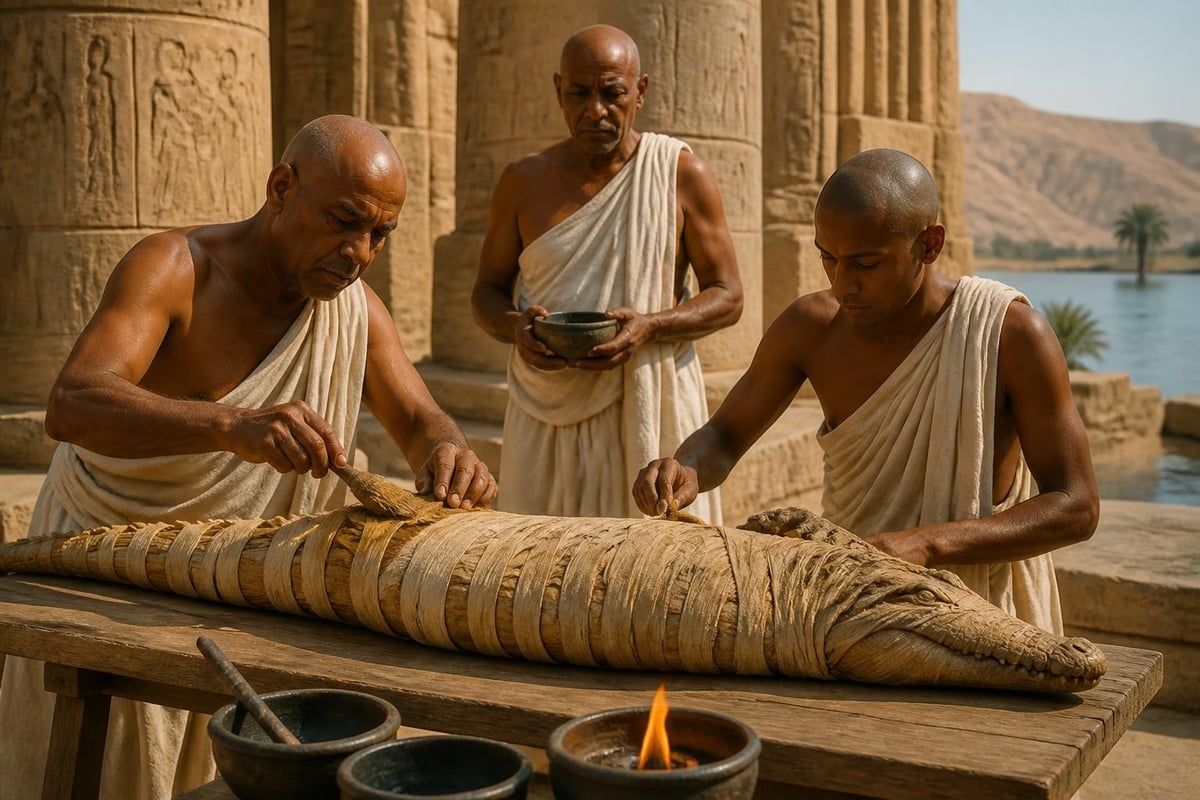
His divine family at Kom Ombo included Hathor as his consort and Khonsu as their son, forming a local triad. Priests maintained sacred crocodiles in temple pools, adorning them with gold jewellery and feeding them choice offerings. Upon death, these creatures underwent mummification and ceremonial burial.
Horus the Elder: The Sky God
Horus the Elder (distinct from Horus, son of Isis and Osiris) represented the sky, kingship, and protective power. His falcon iconography dominates the northern half of the temple, with his divine family comprising Tasenetnofret as wife and Panebtawy as son.
The theological choice to pair these deities remains debated among Egyptologists. Some scholars suggest geographical logic: Sobek represented the river and its dangers, whilst Horus embodied the protective sky above. Others propose political motivations during the Ptolemaic period, when Greek rulers sought to honour multiple Egyptian traditions simultaneously.
| Deity | Role | Sacred Animal | Divine Family |
|---|---|---|---|
| Sobek | Fertility, protection, Nile power | Crocodile | Hathor, Khonsu |
| Horus the Elder | Sky, kingship, protection | Falcon | Tasenetnofret, Panebtawy |
The Crocodile Museum: Ancient Mummies and Modern Science
Adjacent to the temple, the Crocodile Museum houses one of Egypt's most unusual collections. Opened in 2012, this modern facility displays mummified crocodiles recovered from nearby cemeteries, offering tangible evidence of Sobek's cult practices.
The museum's centrepiece is a collection of perfectly preserved crocodile mummies ranging from hatchlings to massive adults exceeding four metres in length. Display cases present the mummification process, showing the linen wrappings, resin treatments, and careful positioning that preserved these creatures for millennia.
Museum highlights include:
- Over 40 mummified crocodiles in various sizes
- Crocodile sarcophagi and burial containers
- Interactive displays explaining mummification techniques
- Artefacts from excavations around Kom Ombo
- Educational panels on Sobek worship practices
The Crocodile Museum brochure from Egyptian Monuments provides comprehensive details about the collection and its archaeological context. Recent scientific research, including a PLOS ONE study on crocodile mummies from the Aswan region, has used CT scanning and radiography to examine these specimens non-invasively, revealing new insights into ancient embalming practices and the species used in religious rituals.
The Famous Medical Instruments Relief
Among Kom Ombo's most celebrated features is a wall relief depicting what many identify as surgical instruments. Located on the inner corridor behind the sanctuary, this carving shows objects resembling scalpels, bone saws, dental tools, forceps, and medicine containers.
Interpreting Ancient Medical Knowledge
This relief has sparked considerable scholarly debate. Some Egyptologists interpret it as evidence of sophisticated medical practice in Ptolemaic Egypt, whilst others suggest the instruments served ritual or symbolic purposes rather than surgical functions.
The Wellcome Collection catalogues an image of this famous relief, which has become iconic in discussions of ancient Egyptian medicine. The precision and variety of the depicted tools suggest advanced metalworking capabilities and anatomical understanding, whether applied medically or ceremonially.
The temple also features birth-house (mammisi) reliefs showing obstetric scenes, reinforcing Kom Ombo's association with healing and fertility. These carvings complement the instruments relief, creating a comprehensive picture of ancient healthcare practices in the Nile Valley.
Visiting Kom Ombo: Practical Considerations for 2026
Most travellers experience aswan kom ombo as part of a Nile cruise itinerary, with ships typically docking in late afternoon or evening. The temple's riverside location makes it particularly atmospheric during sunset, when golden light illuminates the sandstone columns and reliefs.
Arrival Options and Timing
By Nile cruise: The most common approach, with vessels mooring directly beside the temple. Evening visits (4-8 PM) coincide with cruise schedules and offer excellent photography light.
By road: Private vehicles or group coaches cover the 50-kilometre journey from Aswan in approximately 45 minutes. Morning visits provide cooler temperatures and fewer crowds.
Combined tours: Many itineraries pair Kom Ombo with Edfu Temple to the north, covering both sites in a single day when travelling between Aswan and Luxor. Those planning broader exploration of the region might consider things to do in Aswan or things to do in Luxor to complement their temple visits.
On-Site Experience
- Begin at the Crocodile Museum (allow 30-40 minutes)
- Enter the temple through the Roman forecourt
- Explore the dual hypostyle halls
- Visit both sanctuaries to compare their decorations
- Locate the medical instruments relief
- Check the nilometer near the southeastern corner
- Walk the outer corridors for birth-house reliefs
A comprehensive visit requires 90-120 minutes. Licensed Egyptologist guides can illuminate the temple's complex symbolism and historical context in ways that enhance the experience significantly beyond self-guided exploration.
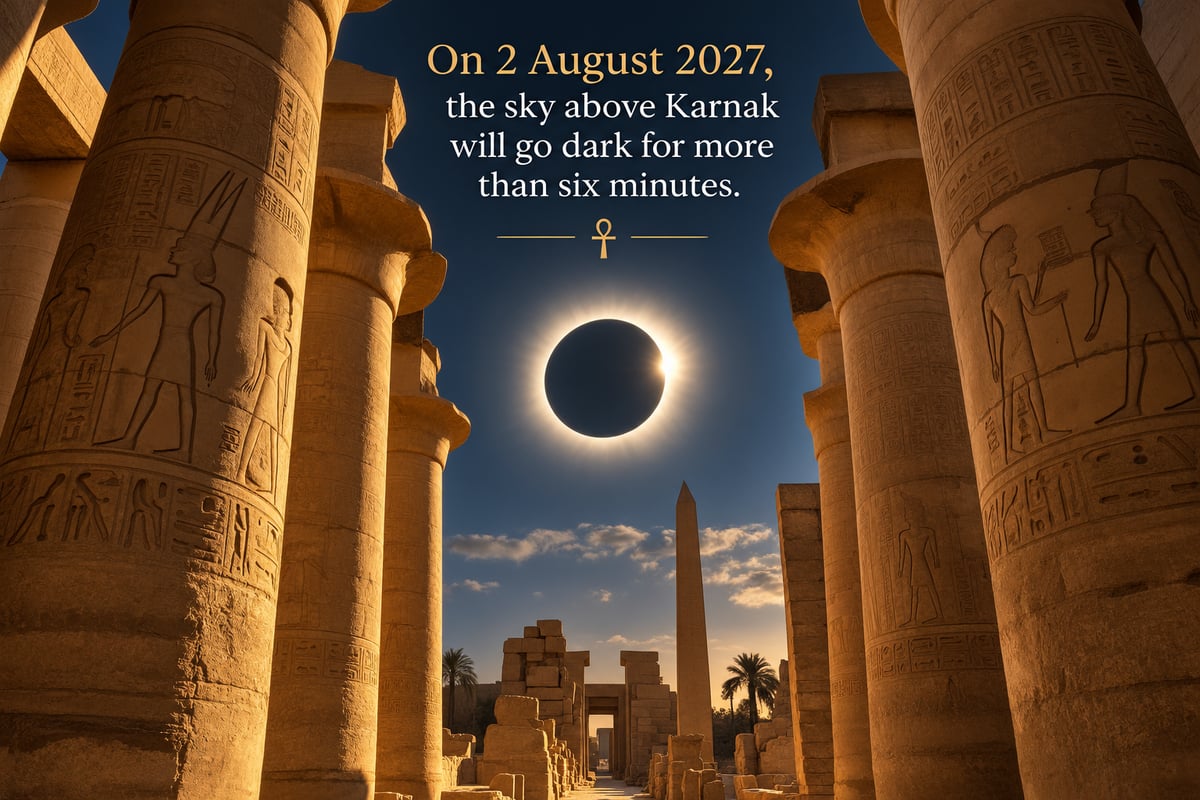
For travellers planning extended journeys in 2026, the upcoming celestial event offers extraordinary timing. On 2 August 2027, Luxor will experience the longest total solar eclipse of the century, with over six minutes of totality above its ancient temples. My Way To Egypt's Egypt Total Solar Eclipse Tours 2027 combine this once-in-a-lifetime astronomical phenomenon with comprehensive exploration of Upper Egypt's temples, including the aswan kom ombo route.
Historical Context: From Ancient Worship to Modern Discovery
The site's religious significance predates the current structure considerably. Archaeological evidence suggests worship at this location from at least the Middle Kingdom (c. 2000 BCE), though the visible remains date to the Ptolemaic and Roman periods.
Construction Timeline
The temple underwent construction in phases:
- 180 BCE: Ptolemy VI Philometor initiated construction
- 116-80 BCE: Ptolemy IX Soter II expanded the complex
- 57-51 BCE: Ptolemy XII Neos Dionysos added decorative elements
- Roman period: Forecourt additions and structural modifications
This extended building programme explains stylistic variations and the incorporation of both Egyptian and Greco-Roman architectural elements. The Romans particularly favoured Kom Ombo, adding substantial structures and maintaining active worship well into the Christian era.
Decline and Rediscovery
Christianity's rise led to the temple's abandonment by the 4th century CE. Nile floods, earthquakes, and stone quarrying for later construction projects damaged the complex over subsequent centuries. The front pylon largely disappeared, and river erosion threatened the entire structure.
Systematic archaeological work began in the 19th century, with major clearance and stabilisation projects in the 20th century preventing further deterioration. Today, ongoing conservation by Egypt's antiquities authorities maintains the site whilst allowing visitor access.
Symbolism and Ritual Practice at Kom Ombo
The aswan kom ombo temple's dual nature created unique ceremonial requirements. Priests served both deities simultaneously, performing parallel rituals in matching sanctuaries according to the same liturgical calendar.
Daily Temple Rituals
Ancient texts and archaeological evidence reveal the temple's daily rhythm:
- Dawn purification and opening ceremonies in both sanctuaries
- Morning offerings of food, incense, and libations to Sobek and Horus
- Midday recitations and hymns
- Evening rituals closing the sanctuaries
- Special ceremonies during festivals and astronomical events
The temple calendar aligned with agricultural seasons and Nile flood cycles, reflecting the deities' roles in fertility and protection. Sobek's festivals particularly emphasised water and renewal, whilst Horus celebrations focused on royal legitimacy and cosmic order.
The Nilometer's Practical Purpose
Kom Ombo's nilometer, a graduated well connected to the river, served both practical and religious functions. Officials used it to measure annual flood heights, predicting agricultural yields and calculating taxation. Religiously, the rising waters represented Sobek's life-giving power and required appropriate ceremonial acknowledgement.
| Flood Level | Agricultural Impact | Religious Response |
|---|---|---|
| Low | Drought, poor harvests | Supplication rituals, increased offerings |
| Optimal | Abundant crops | Thanksgiving festivals, celebration |
| Excessive | Destruction, displacement | Protection rituals, emergency appeals |
Connecting Kom Ombo with Broader Egyptian Exploration
The temple's location between Aswan and Luxor makes it an ideal component of Upper Egypt itineraries. Travellers can easily combine it with other significant sites along the Nile corridor.
Nearby Attractions
Aswan area (50 km south):
- Philae Temple, dedicated to Isis
- Aswan High Dam
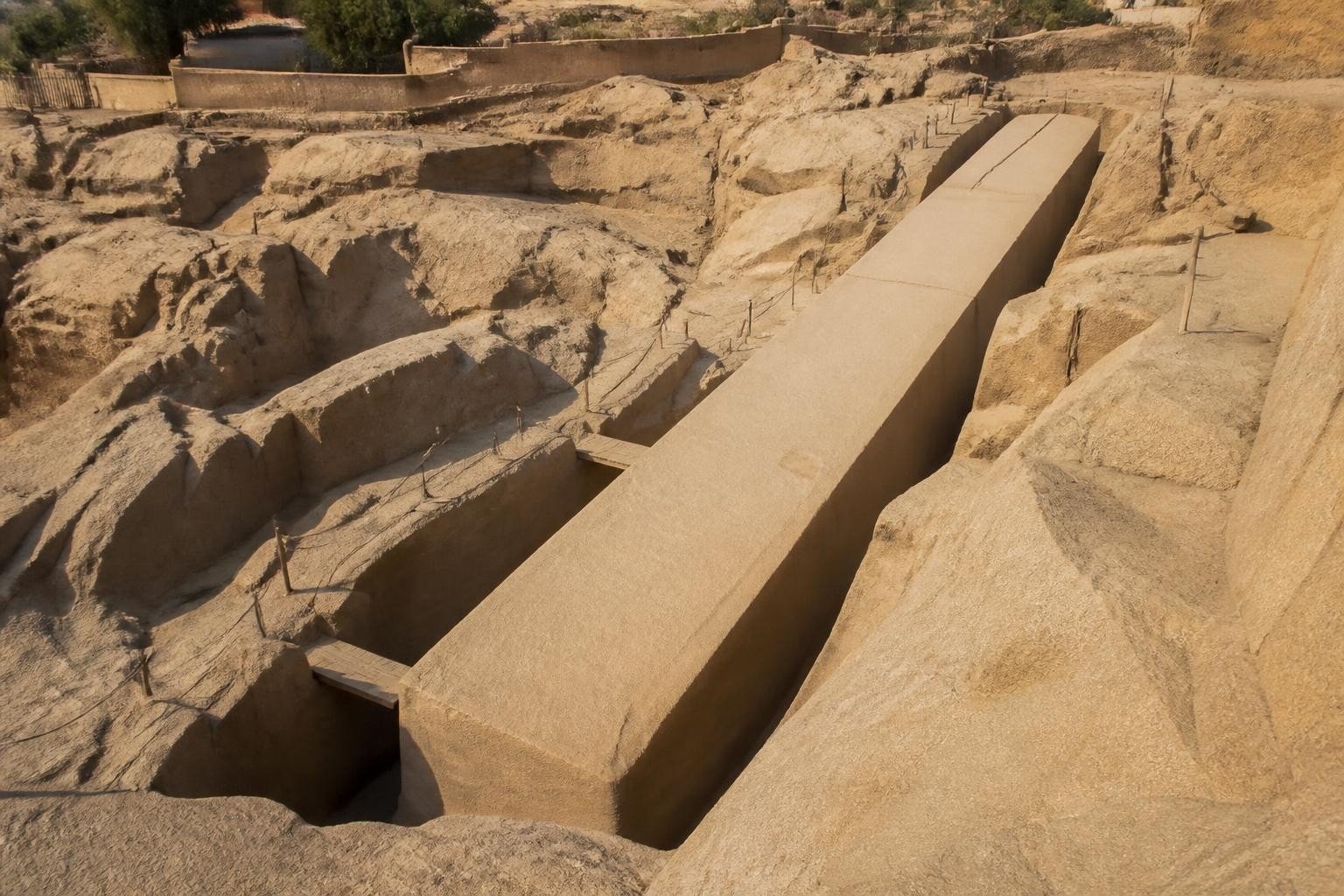
- Unfinished Obelisk
- Nubian villages
- Abu Simbel day trips
Edfu Temple (65 km north):
- Best-preserved ancient Egyptian temple
- Dedicated to Horus the Younger
- Spectacular pylon and sanctuary
- Often visited on the same day as Kom Ombo
Luxor (110 km north):
- Karnak Temple complex
- Luxor Temple
- Valley of the Kings
- Hatshepsut Temple
When planning multi-day explorations, consider Egypt itinerary options that balance major monuments with less-visited sites. The aswan kom ombo corridor offers this balance perfectly, delivering spectacular architecture without the overwhelming crowds of Giza or Karnak.
The Night Visit Experience
Evening arrivals at Kom Ombo create dramatically different atmospheres compared to daytime visits. Strategic floodlighting illuminates the reliefs and columns, creating shadows that emphasise the carvings' depth and detail.
Cruise schedules typically allow 60-90 minutes after dark, sufficient for both the museum and temple exploration. The cooler temperatures and softer light make photography particularly rewarding, though a torch proves useful for examining darker corners and reading hieroglyphic inscriptions.
Night visits do present challenges: crowds can be significant when multiple ships dock simultaneously, and the lighting, whilst atmospheric, obscures some details visible in natural daylight. Travellers with flexibility might request morning road transfers from Aswan to experience both lighting conditions across separate visits.
Preservation Challenges and Conservation Efforts
Kom Ombo faces ongoing threats requiring continuous conservation intervention. The temple's riverside location exposes it to elevated humidity and periodic flooding, whilst structural damage from historical earthquakes and stone theft demands stabilisation work.
Current preservation priorities include:
- Foundation reinforcement against river erosion
- Relief conservation and cleaning
- Column stabilisation and cap replacement
- Drainage system improvements
- Visitor pathway management to reduce wear
Egypt's Ministry of Tourism & Antiquities collaborates with international organisations on these efforts, balancing preservation needs with visitor access. Respectful tourism practices-staying on designated paths, avoiding touching carvings, and following photography guidelines-directly support long-term site conservation.
Photographic Opportunities and Tips
The temple's symmetry and riverside setting create exceptional photographic compositions. Sunset light striking the western-facing façade produces warm tones that enhance the sandstone's natural colour, whilst night floodlighting offers dramatic contrasts.
Recommended shots:
- Wide-angle views capturing the dual sanctuary concept
- Column details in the hypostyle halls
- Relief close-ups showing Sobek and Horus imagery
- Nile views through temple doorways
- Crocodile mummy displays in the museum
- The medical instruments relief (requires good lighting)
Tripods typically require special permission, and flash photography may be restricted in certain areas to protect pigmented reliefs. Professional cameras often incur additional fees, whilst mobile phone photography remains free and unrestricted.
The aswan kom ombo journey reveals how ancient Egyptian architects created spaces for dual divine worship through remarkable symmetry and thoughtful design. From the mummified crocodiles in the adjacent museum to the mysterious surgical instruments carved into temple walls, Kom Ombo offers layers of historical, religious, and scientific fascination that reward careful exploration. Whether you visit by cruise ship at sunset or by private vehicle in the morning calm, this unique double temple deserves time and attention as part of your Upper Egypt discovery. My Way To Egypt specialises in creating tailored itineraries that position Kom Ombo within broader journeys through Aswan, Luxor, and beyond, with expert Egyptologists who bring these ancient stones to life through knowledge, storytelling, and genuine passion for Egypt's extraordinary heritage.